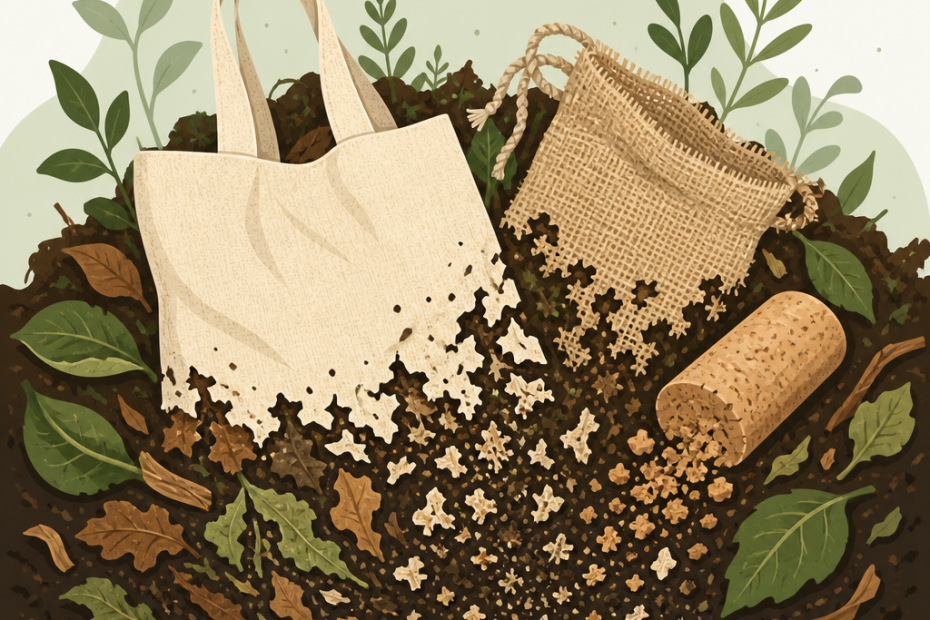
“Biodegradable” is one of the most promising and most abused words in sustainable fashion. A truly biodegradable bag breaks down naturally at the end of its life instead of sitting in a landfill for centuries — but the reality is full of caveats: some “biodegradable” materials only break down in industrial facilities, some need specific conditions, and some claims are marketing with no science behind them. This guide explains what biodegradable bag materials actually are, which ones hold up, and how to verify the claims.
Biodegradable Bag Materials Explained: What Breaks Down and What Does Not
Sponsored: This article features products from brand partner campaigns on Amazon. We may earn a commission from qualifying purchases made through the product links in this post, at no extra cost to you.
What “Biodegradable” Really Means
Biodegradation is the breakdown of a material by microorganisms into water, carbon dioxide, and biomass. The key words are “under the right conditions”—and that is where most of the confusion lies. Some materials biodegrade in a backyard compost bin in months; others only break down in industrial composting facilities at specific temperatures; and some “biodegradable plastics” fragment into microplastics without ever truly decomposing. A material is only as biodegradable as the environment it actually ends up in.
The honest framing: for a bag to matter, the material must break down in a realistic disposal scenario — home compost, municipal compost, or soil — not just in a lab.
The Materials That Actually Biodegrade
| Material | How it degrades | Reality check |
|---|---|---|
| Organic cotton | Decomposes in soil and compost in months | Genuinely biodegradable, but check the farming story |
| Hemp and linen | Strong fibers that biodegrade naturally | Durable and biodegradable — a strong combination |
| Jute and sisal | Plant fibers, fast natural breakdown | Great for totes, less for structured bags |
| Cork | Natural bark, compostable | Durable, waterproof, and biodegradable |
| Piñatex (pineapple leaf) | Plant-based backing, partially compostable | Check the coating — some versions use a plastic binder |
| PLA “bioplastic” | Biodegradable only in industrial composting | Does not break down in a landfill or home compost |
| PVC / PU “vegan leather” | Does not biodegrade; fragments into microplastics | Not biodegradable, despite marketing |
The pattern is clear: natural plant fibers biodegrade naturally; synthetic “bioplastics” and PVC/PU only degrade under specific industrial conditions—or not at all.
Biodegradable bag materials: the breaks-down explained
Biodegradable material discussions have a breakdown at the center: the biodegradable bag materials are understood. The conversations are consistent — the biodegradable bag materials — the what-breaks-down, the what-doesn’t, and the choices — explain the eco claims, and the explained angle covers the analysis.
The practical advice: understand the biodegradable materials — what breaks down: the plant-based and the compostable options, and what doesn’t: the oxo-degradable and the plastic blends — with the certifications and the disposal. The bag that works is the one genuinely biodegradable and disposed right. The informed eco pick is the one the explanation delivered.
Durability vs. Biodegradability: The Trade-Off
Here is the tension most shoppers miss: a bag that biodegrades quickly is also a bag that wears out quickly. A jute tote may break down beautifully in compost — but it also breaks down on your shoulder after a season. The most sustainable bag is still the one used for a decade, even if its materials are not perfectly biodegradable.
The resolution is layering: choose durable natural materials (canvas, hemp, full-grain leather) that last for years and are biodegradable at the end of life, rather than flimsy “biodegradable” materials that fail fast. A cotton canvas tote used 500 times and then composted beats a “biodegradable” tote used 20 times.
See the canvas tote bag set on Amazon
How to Verify Biodegradability Claims
- Look for certification — ASTM D6400 or EN 13432 certify compostability in industrial facilities; “home compostable” certifications (like TÜV OK Compost Home) are stricter and more relevant.
- Ask what conditions — a claim of “biodegradable” without conditions is a red flag; every honest material degrades only under specific circumstances.
- Check the composition — a “plant-based” bag with a plastic lining or coating is not biodegradable as a whole.
- Beware “oxo-degradable” — plastics with additives that fragment into microplastics are marketed as biodegradable but are widely criticized and banned in the EU.
- Consider the end of life: will this bag realistically reach a compost facility or a landfill? If the latter, “biodegradable” matters less than durability.
Natural Fibers: The Biodegradable Workhorses
For bags, the most practical biodegradable materials are the classics:
- Organic cotton canvas — durable, washable, and decomposes in months when composted. The workhorse of reusable totes.
- Hemp — stronger than cotton, resistant to mold and UV, and fully natural. A top choice for long-lasting biodegradable bags.
- Linen (flax) — light, strong, and biodegradable; ages beautifully.
- Cork — harvested from bark without killing the tree, waterproof, and compostable. A genuine standout.
These materials degrade, honestly, at end-of-life and — crucially — last long enough to make their biodegradability meaningful.
Frequently Asked Questions
Is “biodegradable plastic” a good material for bags? Usually not. Most biodegradable plastics (like PLA) require industrial composting at 130°F+ and do not break down in home compost or landfills—and some fragment into microplastics. Natural fibers are the honest choice.
Do biodegradable bags really help the environment? Yes, if they reach the right disposal environment and if they last long enough to replace many single-use or short-lived bags. A compostable tote used twice is still waste; a canvas tote used for years and composted at the end is genuinely better.
How long do natural fiber bags take to biodegrade? In a home compost pile, cotton and hemp bags break down in 3–12 months, depending on conditions. In a landfill — where oxygen and microbes are scarce — everything degrades slowly, which is why durability matters more than biodegradability for landfill-bound items.
Is leather biodegradable? Yes — untreated or vegetable-tanned leather biodegrades naturally, though slowly (years to decades). Chrome-tanned leather breaks down more slowly and with more residue. Durability makes leather one of the most sustainable materials despite its slow decomposition.
What is the most sustainable bag material overall? The one you use the longest. Among natural materials, full-grain leather and hemp offer the best combination of durability and biodegradability. The hierarchy that matters: use it for years, then let it compost.
Bottom Line
Biodegradable bag materials are real, but the label is only as good as the conditions it implies. Natural plant fibers — cotton, hemp, linen, jute, cork — biodegrade honestly and can be certified; synthetic “bioplastics” and PVC/PU usually do not. The sustainable formula is layered: choose durable natural materials that last for years, verify compostability claims with certifications, and accept that a bag used for a decade is the most biodegradable purchase of all — because it never needed to be replaced.
Disclosure: This article contains sponsored content and product links. As an Amazon Associate, we may earn from qualifying purchases. Prices and availability were checked at the time of writing and may change.