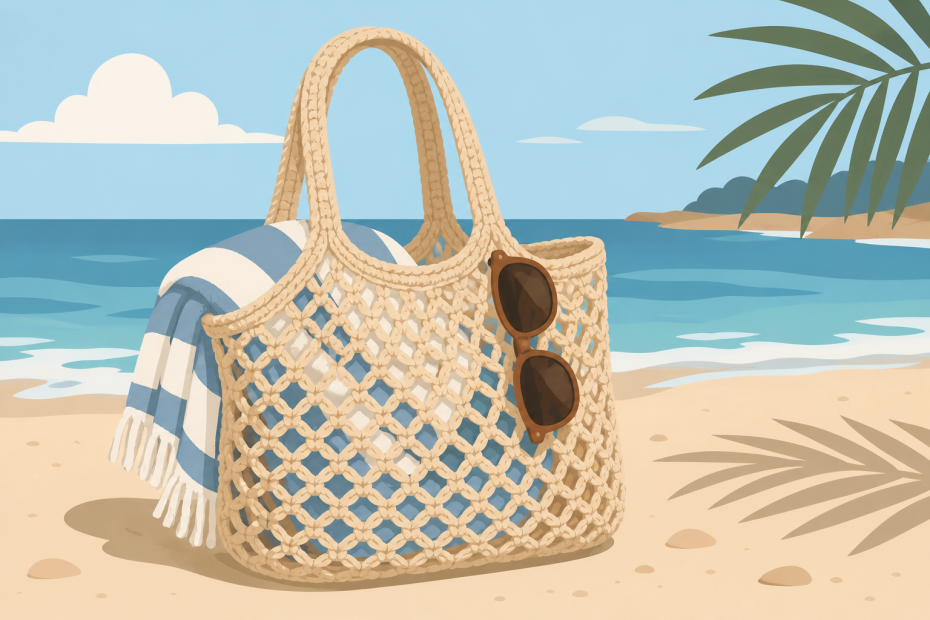
Crochet totes have moved from craft fair novelty to genuine everyday carry, and it is easy to see why — the open, textured weave is lightweight, breathable, and unmistakably handmade-looking. But a crochet tote’s open mesh raises a practical question: what can it actually hold? This guide explains what crochet and mesh totes do well, what to check on a listing, and how to use one without losing your keys to the gaps.
Crochet and Mesh Tote Bags: The Lightweight, Breathable Carry
Sponsored: This article features products from brand partner campaigns on Amazon. We may earn a commission from qualifying purchases made through the product links in this post, at no extra cost to you.
Crochet totes are made from yarn worked into an open, patterned mesh — a construction that gives them two standout qualities: they weigh almost nothing, and they breathe like no other bag. That makes them ideal for beach days (sand falls right out), market trips, and warm-weather carry. The trade-off is that the open weave does not hide contents, and small items can slip through or get lost in the pattern. Knowing that going in is the difference between a bag you love and one you never use.
The Short Answer
Choose a crochet tote by matching three things: yarn and stitch density (tighter weaves carry small items better and hold their shape), size (match to beach, market, or daily errands), and practical details (a lining or inner pocket solves the small-items problem). A crochet tote is the right choice when you want light, breathable, low-maintenance carry — pair it with a pouch or lining for keys, phone, and wallet.
Yarn, Stitch Density, and Durability
Not all crochet is created equal. The yarn material decides strength and feel: cotton crochet is sturdy, washable, and the classic choice; acrylic is lighter and often softer but can stretch and pill; blended yarns aim for a middle ground. The stitch density decides what the bag can carry — a tighter, denser weave holds small items and keeps its shape, while a loose, open mesh is lighter but lets things fall through and stretches under load.
Check the listed material and look at the weave in the product photos. If the bag has a lining, it solves both the small-items and the stretch problems at once. If it is unlined, plan to carry a pouch or keep the bag to larger items like towels, produce, and beach gear.
Material Reality Check
Cotton crochet: sturdy, washable, classic. Acrylic: light, soft, can stretch. Tighter weaves carry more and hold shape; loose mesh is lighter but gap-prone. A lining fixes the practical gaps.
Size and What It Can Hold
Crochet totes range from small market bags to large beach totes. A compact bag around 12–14 inches (30–36 cm) suits a phone, wallet, and a few small items; a mid-size 15–17 inch (38–43 cm) bag handles market runs and daily errands; large totes at 18+ inches (46+ cm) fit towels, produce, and beach days. Because the open weave stretches, a crochet tote can often hold more than its flat dimensions suggest — but remember that what goes in is visible, and small items need containment.
For market and produce use, the breathable mesh is genuinely practical — air circulates, moisture escapes, and sand or debris falls out. For everyday carry, size the bag to your routine and add an interior pouch for the small essentials.
Size Quick Guide
12–14 in (30–36 cm): small essentials. 15–17 in (38–43 cm): daily errands and markets. 18+ in (46+ cm): beach and bulk carry. Match to your routine, and expect the weave to stretch a little under load.
Practical Details: Pockets, Linings, and Straps
The details decide whether a crochet tote works daily. A lining or interior pocket is the single most useful addition — it gives small items a home and protects against the gaps in the weave. If the bag is unlined, a removable pouch or organizer solves the same problem. Check the straps: crochet straps can stretch, so reinforced or double-strand handles carry better, and longer handles are easier to shoulder.
Care matters too: most cotton crochet is machine-washable on gentle (check the label), which is a genuine advantage for beach and market bags that see sand and produce. Air dry to keep the shape — high heat can shrink or distort the weave.
Detail Checklist
Lining or interior pocket (or plan a pouch), reinforced or double-strand straps, and machine-washable cotton. Air dry to preserve the shape.
What the Verified Options in This Category Offer
The Topdear crochet tote line illustrates the aesthetic end of the category: knitted and crochet bags with a distinctive, handmade look, sized for beach and everyday use. Published specifications and verified owner reviews consistently describe these totes as lightweight, eye-catching, and roomier than they look — the qualities that make crochet totes popular. Owner feedback across the category praises the breathable, low-maintenance design, and it advises pairing an unlined bag with a pouch for small items, which is exactly the practical note this guide makes.
| Consideration | What to check on the listing | Why it matters |
|---|---|---|
| Material | Cotton vs. acrylic vs. blend | Cotton is sturdy and washable; acrylic stretches |
| Stitch density | Tight vs. open weave | Open mesh is light but gap-prone |
| Size | Dimensions | Match to beach, market, or daily errands |
| Lining | Lined or unlined | Lining solves the small-items problem |
| Straps | Reinforced or double-strand | Prevents stretching under load |
| Care | Machine-washable | Practical for beach and market use |
Related Topics You May Find Helpful
Are crochet tote bags durable? Yes, with the right yarn and construction — cotton crochet is sturdy and washable. Open weaves can stretch and gap, so check the stitch density and consider a lined version for daily use.
Crochet and mesh totes: the breathable carry
Crochet tote discussions have a weave at the center: the crochet and the mesh tote bags are the lightweight and the breathable carry. The conversations are consistent — the crochet and the mesh tote bags — the lightweight, the breathable, and the fits — serve the summer carry, and the breathable angle covers the choice.
The practical advice: understand the crochet and the mesh designs — the open weaves that air and drain — and the features: the lightweight, the stretch, and the beach use, with the fit for the summer days. The tote that works is the one breathable, light, and matched to the season. The summer carry is the one the weave delivered.
How do I keep small items from falling out of a crochet bag? Use the lining if the bag has one, or carry a small pouch or organizer inside. That one habit makes an unlined crochet tote genuinely practical.
Can I wash a crochet tote bag? Most cotton crochet bags are machine-washable on a gentle cycle — check the care label. Air dry to keep the shape; high heat can shrink or distort the weave.
Are crochet totes good for the beach? Excellent — the open weave lets sand fall out and air circulate, so the bag stays clean and light. Pair it with a dry pouch for wet items.
What we covered
- Crochet totes are light, breathable, and low-maintenance — ideal for beach and market.
- Cotton crochet is sturdy and washable; loose weaves stretch and gap.
- A lining or interior pouch solves the small-items problem.
- Size the bag to your routine — the weave stretches, but contents are visible.
- Reinforced straps and machine-washable material make the bag last.
Featured Product
For a lightweight, breathable crochet tote with a distinctive handmade look, the Topdear crochet tote line is sized for beach and everyday use — check the current listing, material, and dimensions: See the Topdear crochet tote on Amazon.
Disclosure: This article contains sponsored content and product links. If you make a purchase through the links in this post, we may earn a commission at no extra cost to you. Product evaluations are based on published specifications, industry guidance, and verified owner feedback.