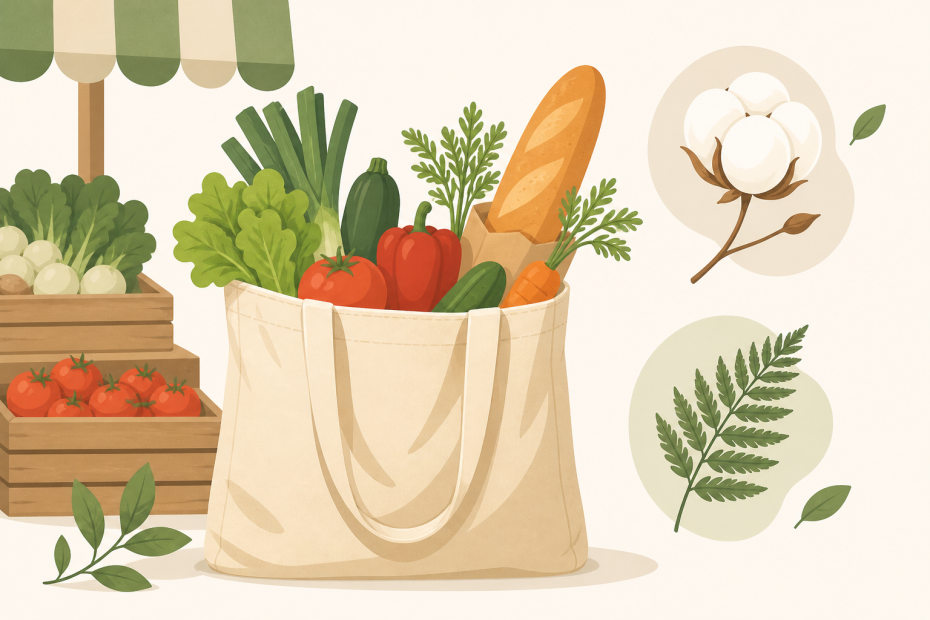
The most-used bag in most households is not a designer handbag — it is the tote that carries groceries, gym clothes, books, and beach days. Choosing an eco-friendly version of this everyday workhorse is one of the highest-impact sustainability decisions a shopper can make, because a durable natural-fiber tote replaces hundreds of single-use bags over its life. This guide covers the best sustainable tote materials, what to check before buying, and which everyday carry options genuinely deliver.
Eco-Friendly Tote Bags: Choosing Natural, Durable Everyday Carry
The EPA’s math on reusable bags is striking: each reusable bag can eliminate hundreds — if not thousands — of single-use plastic or paper bags over its lifetime (EPA, Ten Ways to Unpackage Your Life). That calculation only holds if the tote is durable enough to actually be reused for years, which is why material and construction quality — not just the word “eco” on the label — are the real sustainability features to look for.
What Makes a Tote Eco-Friendly
Three factors decide a tote’s environmental profile: the material’s origin, its durability, and its end of life. Natural fibers — organic cotton canvas, hemp, and linen — are renewable and compostable at end of life, unlike petroleum-based synthetics. Durability matters more than material origin: a heavy cotton canvas tote that lasts five years beats a lightweight “eco” tote that tears in months. Construction details — double-stitched seams, reinforced handles, and gusseted bases — are what actually determine lifespan.
The honest trap to avoid: the word “eco-friendly” on a thin, single-layer tote that fails quickly. A well-made natural-fiber tote is the real sustainability win, even if it costs a few dollars more upfront.
The Short Answer
An eco-friendly tote combines a renewable natural material (organic cotton, hemp, linen), durable construction (double stitching, reinforced handles), and a compostable or recyclable end of life. Durability is the decisive factor — a heavy canvas tote used for years replaces hundreds of single-use bags, per EPA framing.
Materials Compared: Cotton, Hemp, and Beyond
Organic cotton canvas is the mainstream choice: renewable, strong, and machine-washable, with the trade-off that cotton is water-intensive to grow. Hemp is the sustainability standout — it grows quickly with little water, needs no synthetic pesticides, and is exceptionally strong, though it is less common and pricier. Linen (flax) offers similar environmental strengths with a distinct texture. All three are natural and biodegradable at end of life, which synthetics are not.
| Material | Durability | Environmental profile | Best for |
|---|---|---|---|
| Organic cotton canvas | High (12 oz+ best) | Renewable, compostable; water-intensive to grow | Everyday totes, groceries, work bags |
| Hemp | Very high | Fast-growing, low water, no synthetic pesticides | Heavy-duty and long-lasting carry |
| Linen (flax) | High | Low input, biodegradable | Stylish everyday and summer bags |
| Recycled polyester | High | Reuses plastic waste but sheds microfibers | Outdoor and weather-resistant bags |
No material is perfect, and the honest recommendation is to weigh durability most heavily. A hemp or organic canvas tote with reinforced handles will outperform a thinner natural-fiber bag in real-world use.
Eco-friendly totes: the natural daily carry
Eco tote discussions have a material at the center: the eco-friendly totes use the natural durable materials. The conversations are consistent — the eco-friendly tote bags — the what, the materials, and the durability — serve the daily carry, and the choosing angle covers the choice.
The practical advice: understand what makes a tote eco-friendly — the natural fibers, the responsible production, and the durability — and the choice: the organic cotton, the hemp, and the jute matched to the daily use. The tote that works is the one natural, durable, and used daily. The eco-friendly carry is the one the materials delivered.
Key Facts at a Glance
Organic cotton canvas is the mainstream eco choice (renewable, compostable, water-intensive to grow); hemp is the sustainability standout (low water, no synthetic pesticides, very durable); linen is a strong natural alternative. All three are biodegradable, unlike synthetics. Prioritize durable construction — seams and handles — over label claims.
What to Check Before Buying a Tote
Use this checklist on any eco-friendly tote listing: fabric weight (12 oz canvas, about 405 g/m², is the heavy-duty standard; 8 oz, about 270 g/m², is lighter and fine for casual use), stitching quality (double-stitched seams at handles and base), handle design (shoulder-length straps suit heavy loads, short handles suit hand-carry), and interior features (a pocket for keys and phone prevents digging). Then check the reviews for durability feedback — the honest test of any “eco” claim is whether owners report years of use.
For batch needs — events, markets, or store branding — blank canvas totes bought in bulk are both economical and genuinely reusable, and printing or decorating them yourself avoids single-use promotional bags entirely.
Buying Checklist
Check fabric weight (12 oz / 405 g/m² canvas for heavy duty), double-stitched seams, handle type (shoulder for heavy loads, short for hand-carry), and an interior pocket. Read reviews for durability reports — owner feedback is the honest test of eco claims. Blank canvas totes in bulk suit events and markets.
Related Topics You May Find Helpful
Are canvas totes better than plastic bags for the environment? Used consistently, a durable canvas tote replaces hundreds of single-use bags, per EPA framing (EPA, Ten Ways to Unpackage Your Life) — the key is durability plus the habit of actually reusing it.
How many reusable bags do I need? Most households settle on 5–10; keeping them in the car, by the door, and in the kitchen is the habit that makes them get used.
Can I compost a cotton tote? Natural cotton canvas can be composted at end of life, but only if it is uncoated and free of synthetic dyes or prints; otherwise, repurpose or recycle it.
What is the difference between canvas and cotton totes? Canvas is a tightly woven cotton fabric — heavier and more durable than standard cotton cloth; “canvas tote” implies the sturdy weave, “cotton tote” can mean lighter fabric.
What we covered
- Each durable reusable tote replaces hundreds of single-use bags over its life (EPA).
- Organic cotton canvas, hemp, and linen are the top natural, compostable materials.
- Durability beats label claims — check fabric weight, stitching, and handles.
- 12 oz canvas (405 g/m²) is the heavy-duty standard; 8 oz (270 g/m²) suits casual use.
- Blank canvas totes in bulk suit events and markets without single-use waste.
- Owner reviews are the honest test of any eco-friendly claim.
Featured Eco-Friendly Totes
These verified totes span natural materials and price points, from organic cotton blanks to finished hemp and canvas bags. All links open in a new tab.
| Product | Material | Price |
|---|---|---|
| TBF Blank Organic Cotton Canvas Tote Bags (bulk) | Organic cotton canvas | About $14 |
| TBF 24-Pack Eco-Friendly Canvas Tote Bags (wholesale) | Cotton canvas | About $35 |
| Women’s Canvas Tote Bag with Adjustable Crossbody Strap | Canvas | About $18 |
| Hemp Messenger Crossbody Sling Bag (unisex) | Hemp | About $27 |
| Sakroots Arlo Tote Bag (large everyday shoulder bag) | Printed canvas | About $79 |
- Start with blank organic cotton canvas totes for everyday use
- Stock up on a 24-pack of eco-friendly canvas totes for events
- Try a women’s canvas tote with an adjustable crossbody strap
- Explore a durable hemp messenger crossbody bag
- See a large printed-canvas everyday tote from Sakroots
Disclosure: This article contains sponsored content and product links. If you make a purchase through the links in this post, we may earn a commission at no extra cost to you. Product evaluations are based on published specifications and general product-class knowledge; we have not personally tested every item featured.
FAQ
Are canvas tote bags machine washable? Yes — wash in cold water and air dry; hot water and machine drying cause shrinkage and fading, especially on printed designs.
What is the most sustainable tote material? Hemp and organic cotton canvas are the strongest natural contenders — renewable, biodegradable, and durable when well made.
How long does a canvas tote last? A heavy-duty 12 oz canvas tote with reinforced stitching can last years of regular use; lighter 8 oz canvas suits casual, lighter loads.
Do eco-friendly totes cost more? Quality natural-fiber totes cost slightly more than thin alternatives but last far longer — the cost per use is typically lower over the bag’s life.