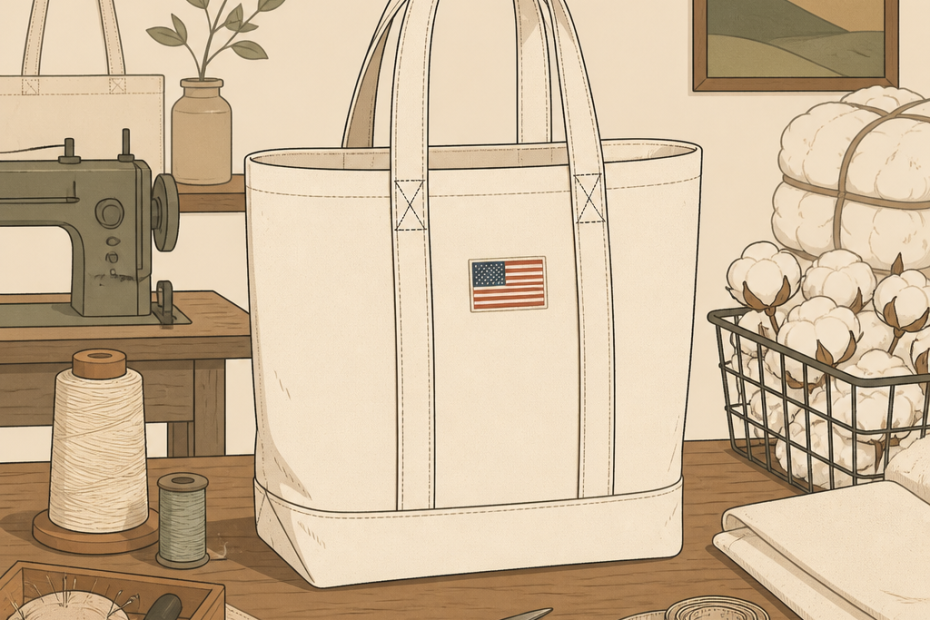
A made-in-USA organic cotton tote is a triple claim that deserves scrutiny: the bag must actually be manufactured domestically, the cotton must be certified organic, and the finished product must hold up to daily use. Each claim is verifiable, but they are frequently mixed in marketing. This guide explains how to confirm a tote is truly made in the USA, what organic certification adds, and which canvas weights and construction details separate a durable domestic tote from an imported one wearing a flag sticker.
Made in USA Organic Cotton Tote Bag: How to Verify the Claims
Sponsored: This article contains product links. We may earn a commission on qualifying purchases at no extra cost to you.
What “Made in USA” Legally Means for a Tote Bag
Under Federal Trade Commission (FTC) rules, a product can be labeled “Made in USA” only if it is “all or virtually all” made in the United States — meaning the final assembly and all significant processing and fabrication happen domestically. For a tote bag, that means the cotton can be grown abroad, but the weaving, cutting, sewing, and finishing should occur in the US for the label to be compliant. The FTC’s Made in USA program actively enforces this standard and publishes guidance for manufacturers [1].
A caveat: some brands use “assembled in USA” or “made in USA with imported materials,” which are different claims with looser standards. Check the exact wording before assuming a bag is fully domestic.
Summary: “Made in USA” under FTC rules means the bag’s fabrication and assembly happen in the United States. “Assembled in USA” and “made with imported materials” are weaker claims — read the exact label wording.
How to Verify the Organic Claim
The organic cotton claim is verifiable through third-party certification. The most comprehensive is GOTS (Global Organic Textile Standard), which audits the entire supply chain — farming, ginning, spinning, weaving, and finishing — for organic content and environmental criteria. USDA Organic certifies the fiber source. A tote that says “organic cotton” without any certification is an unverified marketing claim.
For a made-in-USA tote, look for a GOTS-certified US mill or a brand that names its domestic manufacturing partner. Transparency about the supply chain is itself a quality signal — brands making unverifiable claims rarely name their factories.
Canvas Weight and Construction Quality
A durable tote needs heavyweight canvas and reinforced construction:
Canvas weight. For an everyday tote, 12 to 14 oz (400 to 470 gsm) is the practical range. For grocery and heavy-duty use, 16 to 22 oz (540 to 750 gsm) resists tearing and holds its shape. The extra-large heavy-duty canvas tote (see the heavy-duty canvas tote) uses thick 22-inch-wide canvas with a structured base — the kind of construction that survives years of weekly grocery runs.
Stitching. Look for double-stitched seams and bar tacks at stress points: handle attachments, base corners, and zipper ends. Single-pass stitching on a heavy load is the most common early failure.
Hardware. Metal zippers and solid rivets outlast plastic components. If the tote has a zipper, a full-length metal zipper adds years of secure use.
What to check when comparing canvas totes:
| Feature | Lightweight tote | Everyday tote | Heavy-duty tote |
|---|---|---|---|
| Canvas weight | 8–10 oz | 12–14 oz | 16–22 oz |
| Best for | Errands, gift bags | Commute, daily carry | Groceries, travel |
| Lifespan (daily use) | 6–12 months | 2–3 years | 3–5+ years |
| Handle reinforcement | Single stitch | Double stitch | Bar-tacked |
Organic Cotton vs. Jute: Which Is Better for a Tote
Both are plant-based and biodegradable, but they behave differently:
Organic cotton is softer, more flexible, and more comfortable to carry over the shoulder. It accepts screen printing and embroidery well, washes easily, and packs flat. It is the better everyday material.
Jute is coarser, stiffer, and more brittle over time, but it is highly durable for heavy loads and has a distinctive natural texture. It suits market bags and produce totes more than daily carry.
For most people, organic cotton canvas is the better all-round tote material. Jute is the better choice when you want maximum eco-aesthetic and don’t mind a stiffer bag.
Related Topics You May Find Helpful
Are LL Bean Totes Made in the USA?
LL Bean’s classic Boat and Tote bags have historically been manufactured in the United States, though component sourcing varies by product line. The brand discloses manufacturing details per product; check the current product page for the most accurate information.
Is 100% Organic Cotton Tote Washable?
Yes. Machine wash in cold water on a gentle cycle and hang to dry. Hot water and high-heat drying cause cotton shrinkage — a common reason totes “shrink” after the first wash. Pre-washing a cotton tote before first use can also pre-shrink the fabric.
Why Are Made-in-USA Totes More Expensive?
Domestic manufacturing involves higher labor costs and stricter environmental regulations than production in many overseas factories. The price difference reflects those costs, plus the lower production volume of US mills. For buyers prioritizing domestic manufacturing and supply-chain transparency, the premium is the point.
Frequently Asked Questions About Made-in-USA Cotton Totes
How do I know if a tote is really made in the USA?
Check the FTC-compliant label wording, look for a named US manufacturer or mill, and contact the brand if the supply chain isn’t disclosed. “Assembled in USA” is not the same as “Made in USA.”
What is the best organic cotton for tote bags?
GOTS-certified organic cotton canvas at 12 to 14 oz (400 to 470 gsm) for everyday use, or 16 oz and heavier for grocery and heavy-duty carry. Certification matters more than the fabric’s appearance.
Can I compost an organic cotton tote at the end of its life?
Yes — 100% cotton canvas without synthetic linings, zippers, or coatings is compostable. Remove metal hardware first and cut the bag into smaller pieces to speed decomposition.
Key Takeaways
- “Made in USA” under FTC rules requires domestic fabrication and assembly — verify the exact label wording.
- GOTS certification is the most reliable proof that the cotton is genuinely organic.
- Choose 12–14 oz canvas for everyday carry, 16 oz+ for groceries and heavy loads.
- Double-stitched seams and bar-tacked handles are the durability details that matter most.
- Cold-water washing and hang-drying prevent the shrinkage that ruins cotton totes.