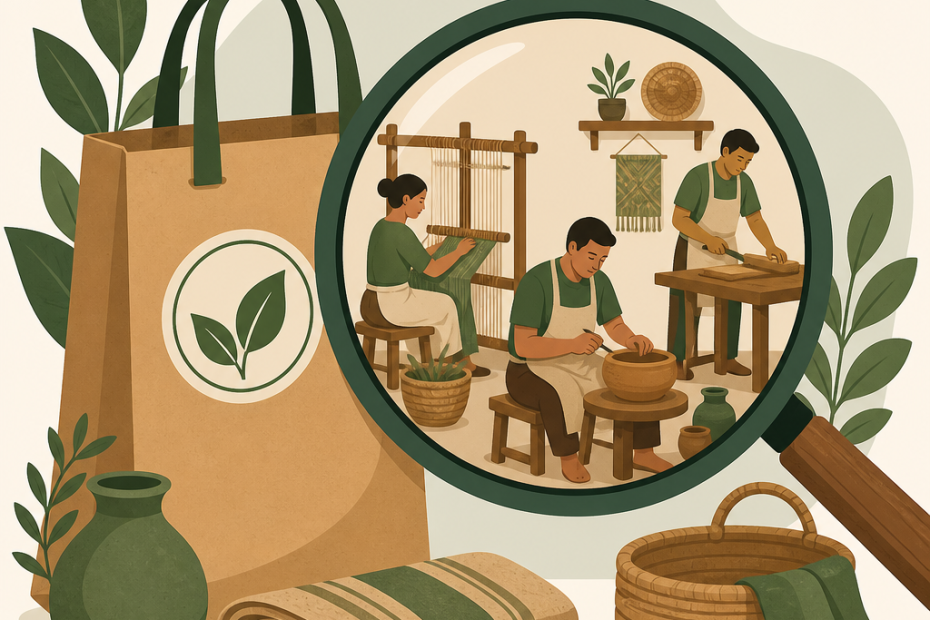
“Sustainable” and “ethical” are the most overused words in fashion — slapped on products with no proof behind them. For shoppers who genuinely care, the challenge is separating real commitment from marketing. This guide explains how to verify a brand’s ethical and sustainability claims: what certifications actually mean, which ones are trustworthy, and what to check when no certification exists.
Sustainable Bag Brands: How to Verify Ethical Manufacturing Claims
Sponsored: This article features products from brand partner campaigns on Amazon. We may earn a commission from qualifying purchases made through the product links in this post, at no extra cost to you.
Why “Sustainable” Needs Verification
Greenwashing is real and widespread. Studies of sustainability claims in fashion regularly find that a large share of vague claims — “eco-friendly,” “green,” “natural” — are unsubstantiated. The reason is simple: sustainability marketing sells, and nothing stops a brand from printing a leaf on a label. The antidote is specific, third-party-verified claims: a certification name, a published factory list, or audited data beat any adjective.
When you see a claim, ask three questions: What exactly is claimed (materials, labor, or carbon)? Who verifies it (an independent auditor or the brand itself)? And is the claim specific (a certification standard) or vague (a buzzword)?
Certifications That Mean Something
Some certifications are independently audited and specific; others are self-declared. Here is the honest breakdown:
| Certification | What it verifies | Trust level |
|---|---|---|
| Fair Trade Certified | Fair wages, safe conditions, community premiums for farmers/workers | High — third-party audited |
| B Corp | Overall social and environmental performance, verified | High — third-party scored |
| Global Organic Textile Standard (GOTS) | Organic fibers + ethical processing | High — third-party audited |
| OEKO-TEX Standard 100 | No harmful substances in finished textiles | High — lab tested |
| Leather Working Group | Environmental practices in leather production | High — audited tanneries |
| Recycled Content (GRS/RCS) | Verified recycled material in the product | Medium-high — audited chain of custody |
| “Eco-friendly” with no standard | Nothing verifiable | Low — treat as marketing |
A brand that names its certifications — and ideally shows its certificate numbers — is making a checkable claim. A brand that only says “we care about the planet” is not.
Sustainable brand claims: the ethics verification
Sustainable brand discussions have a verification at the center: the ethical manufacturing claims are verified. The conversations are consistent — the sustainable bag brands — the how-to-verify, the ethical claims, and the methods — separate the real from the greenwash, and the verification angle covers the process.
The practical advice: understand the how-to-verify of the ethical manufacturing — the certifications, the supply-chain transparency, and the audits — and the claims: the materials, the labor, and the environmental impact, with the research methods. The brand that works is the one verified and transparent. The informed sustainable buy is the one the verification delivered.
What to Check When There Is No Certification
Small, artisan brands often cannot afford certification audits, yet they can still be genuinely ethical. In that case, look for verifiable signals:
- A published factory or workshop location — “made in a family workshop in León, Mexico” is checkable; “ethically made overseas” is not.
- Material transparency — the brand names the tannery, mill, or supplier of its materials.
- Production photos or open workshops — real workshops publish their workspace; greenwashers use stock imagery.
- Worker stories — named artisans with portraits and roles, not anonymous “craftspeople.”
- Repair and care programs — brands serious about longevity — help you keep the product for years.
Materials: What to Look For and What to Question
- Organic cotton / GOTS cotton — verifiable, but check that the fiber is really certified, not just “cotton.”
- Recycled nylon/polyester — good when certified (GRS), but remember recycled synthetics still shed microplastics.
- Vegan leather — often PVC or polyurethane, which are petroleum-based; “vegan” is not automatically “sustainable.”
- Natural fibers (hemp, linen, cork) — strong sustainability story when the farming is certified organic.
- Full-grain leather — durable and repairable; the environmental impact depends on the tannery (check Leather Working Group certification).
The honest lens: durability is part of sustainability. A well-made bag used for a decade has a lower footprint than a “sustainable” bag replaced every two years.
Carbon Neutral: The Most Abused Claim
“Carbon neutral” sounds definitive but often rests on purchased offsets of varying quality. Ask what is actually being done: Does the brand measure its emissions (scope 1, 2, and 3)? Does it reduce them before offsetting? Are the offsets certified (Gold Standard, Verra VCS)? A brand that publishes its carbon footprint and reduction roadmap is doing real work; one that just buys offsets and slaps a label is not.
Verified Examples of Transparent Brands
To see the difference between vague claims and checkable ones, look at how the best small brands present themselves. A brand that names its materials and workshop, publishes production photos, and offers repairs is giving you evidence — the same evidence you would demand from any serious purchase. The linseyCove phone messenger bag, for example, is sold with detailed material and sizing information so you know exactly what you are buying and how it will wear: See the linseyCove sustainable messenger bag on Amazon.
Similarly, the SMONT small tactical messenger bag publishes its construction details and dimensions upfront, so the product matches the description—a small but meaningful signal of brand confidence. See the SMONT tactical messenger bag on Amazon.
How to Research a Brand in 10 Minutes
- Search the brand name plus “certification” and “factory” — see what they publish.
- Check the certifications on the certifier’s own website, not just the brand’s.
- Look for independent reviews and supply-chain reporting from journalists or NGOs.
- Read the product page for specifics: named materials, named workshops, certificate numbers.
- Check return, repair, and warranty policies — longevity is a sustainability feature.
Frequently Asked Questions
Is “vegan leather” automatically sustainable? No. Most vegan leathers are PVC or PU—petroleum-derived plastics that are not biodegradable and can be difficult to recycle. Some plant-based alternatives (cork, Piñatex, apple leather) have better stories, but check the actual composition.
Can a big brand be ethical? Yes — scale is not automatically bad. Big brands with B Corp status, published factory lists, and audited supply chains can be more verifiable than small brands with no documentation. Judge the evidence, not the size.
Do certifications cost too much for small brands? Some do — certification audits run hundreds to thousands of dollars. That is why small brands may rely on transparent sourcing instead. Both approaches can be legitimate; the question is whether the claim is checkable.
Is buying secondhand the most sustainable option? Generally, yes — extending a product’s life avoids all the manufacturing impact of a new bag. Certified sustainable new products are the next-best option when you need something specific.
What is the single best question to ask a brand? “Can you show me the certification or the workshop?” A real answer — a certificate number, a factory address, photos of the actual production — separates substance from slogans.
Bottom Line
Verifying ethical manufacturing is a skill, and it comes down to specificity: certified claims with named standards beat vague adjectives, published workshops beat anonymous “craftsmanship,” and durability is itself a sustainability feature. Favor brands that name their certifications, factories, and materials — then hold them to it by asking. The brands doing real work are usually happy to show you; the ones that are not will not.
Disclosure: This article contains sponsored content and product links. As an Amazon Associate, we may earn from qualifying purchases. Prices and availability were checked at the time of writing and may change.