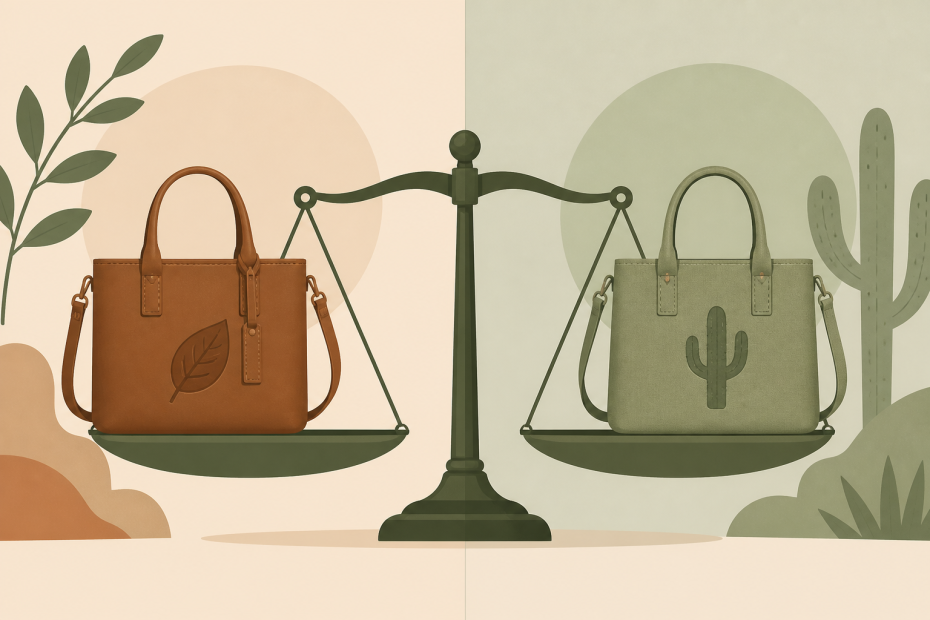
The “sustainable leather vs vegan leather” debate is louder than it needs to be, partly because both sides use the same word — leather — for materials that are fundamentally different. Animal leather is a byproduct of the meat industry, lasts decades with care, and can be biodegradable. Vegan leather is typically synthetic, avoids animal use, but is often made from petroleum-based plastics that do not biodegrade. The honest answer is that neither is inherently better; the context matters.
Sustainable Leather vs Vegan Alternatives: What’s Really Eco-Friendly
Sponsored: This article features products from brand partner campaigns on Amazon. We may earn a commission from qualifying purchases made through the product links in this post, at no extra cost to you.
This is the question that comes up most often in sustainable fashion, and it deserves a real answer — not a slogan. The environmental impact of a bag depends on the specific material, the tannery or factory, the transport distance, and most importantly, how long the bag is used. A bag that lasts ten years is more sustainable than a bag that lasts two, regardless of what it is made from. That simple truth cuts through most of the marketing.
The Short Answer
Choose responsibly sourced animal leather if you care about durability, biodegradability, and a material that ages well and can be repaired. Choose plant-based alternatives (cork, apple leather, cactus leather, mycelium) if you want to avoid animal products entirely and are willing to accept a shorter lifespan and less established repair infrastructure. Avoid petroleum-based synthetic leather unless it is made from recycled materials and you plan to use the item for many years — virgin plastic “vegan leather” has a larger carbon footprint than responsibly sourced animal leather.
Sustainable leather versus vegan: the real-eco comparison
Sustainable material discussions have a comparison at the center: the sustainable leather and the vegan alternatives are compared on the eco. The conversations are consistent — the sustainable leather versus the vegan — the really-eco, the comparison, and the trade-offs — settle the material choice, and the eco angle covers the analysis.
The practical advice: understand what’s really eco — the leather’s longevity versus the vegan’s materials — and the comparison: the production, the durability, and the end-of-life, with the trade-offs: the cost and the care. The material that works is the one matched to the values and the use. The real-eco answer is the one the comparison delivered.
Animal Leather: The Case for Responsible Sourcing
Conventional leather production has real environmental costs — water use, chemical tanning, and land use for cattle. But leather is a byproduct of the meat industry, so the environmental burden is shared with food production. The more sustainable choice within animal leather is vegetable-tanned or chrome-free leather from certified tanneries that manage water and chemical waste. A well-made full-grain leather bag can last decades, and leather can be repaired, reconditioned, and eventually composted.
Plant-Based Alternatives: Real Innovation
The new generation of plant-based leathers — made from cork, apple waste, cactus, pineapple leaves (Piñatex), and mushroom mycelium — avoids the animal-welfare question and often uses agricultural byproducts. These materials vary widely in durability, water resistance, and cost. The best of them are competitive with animal leather in look and feel; the worst of them delaminate within a year. The key is to buy from brands that are transparent about the specific material and its track record.
Synthetic Leather: The Plastic Problem
Most “vegan leather” on the market today is polyurethane (PU) or polyvinyl chloride (PVC) applied to a fabric backing. These materials are durable, water-resistant, and inexpensive, but they are petroleum-based and do not biodegrade. The exception is recycled synthetic leather, which uses post-consumer plastic waste and reduces the virgin-material footprint. If you buy synthetic, choose recycled, and plan to keep the item for years — the environmental cost is front-loaded, so longevity is the only way to amortize it.
How to Compare Honestly
- Ask what the material is made from — “vegan leather” could be plant-based or plastic.
- Look for certifications: OEKO-TEX, Leather Working Group, or specific material certifications.
- Consider the lifespan: a durable material used for ten years beats a biodegradable one replaced every two.
- Consider repair options: stitched construction can be repaired; bonded or coated materials often cannot.
Featured Products
Versatile tote sets made from quality materials with visible stitching and organized compartments are the kind of design that lasts years: See the versatile tote set on Amazon.
For a durable everyday carry, a canvas tote with reinforced stitching and natural materials is a timeless choice: See the canvas grocery tote on Amazon.
The Full-Lifecycle View: What “Eco-Friendly” Misses
The leather-versus-vegan debate is usually framed around production — which material has the smaller footprint in the making. The fuller view includes use and end of life, and it changes the answer. Leather’s production is animal-based and water-intensive, but its use phase is extraordinary: decades of daily service, with conditioning and repair extending that further, and eventual biodegradation. Vegan leather’s production avoids animal agriculture but is usually plastic-based (PU), which does not biodegrade and can shed microplastics during use. The lifecycle comparison: a full-grain leather bag used for 15 years and repaired may beat a vegan leather bag replaced every three years, even if the vegan material’s production was cleaner per unit. The honest conclusion: the material debate cannot be settled on production alone — durability and use are the deciding factors, and the longest-lived bag is the sustainable one regardless of its label.
The Middle Path: Materials That Combine the Best
Between full-grain leather and conventional vegan leather sits a middle path worth considering. Waxed canvas is the standout: a natural material (cotton) with a wax treatment that provides water resistance and durability, no animal products, and a life measured in decades with re-waxing. Recycled and plant-based leathers (pineapple, apple, mushroom) are improving rapidly, though their durability and repairability still trail leather. Recycled synthetics (from plastic bottles) avoid new plastic production but remain plastic at end of life. The buyer’s framework: evaluate each material on the four factors that matter — durability, renewability, end of life, and repairability — rather than the two-factor “animal vs. not” debate. The most sustainable choice is rarely the purest label; it is the material that will be used longest and can be repaired rather than replaced.
Disclosure: This article contains sponsored content and product links. If you make a purchase through the links in this post, we may earn a commission at no extra cost to you. Product evaluations are based on published specifications, industry guidance, and verified owner feedback.