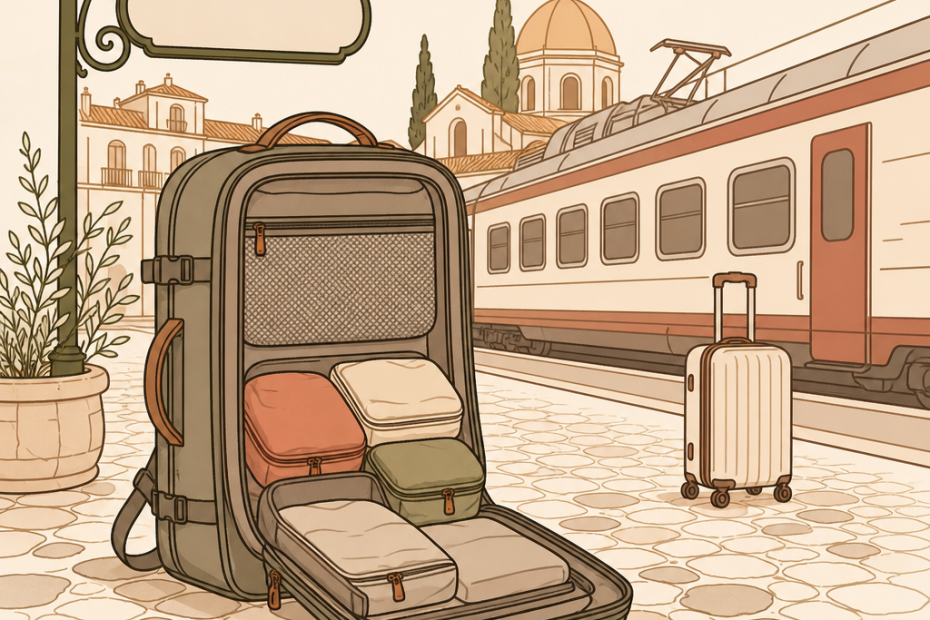
Choosing a carry-on bag for Europe is different from choosing one for domestic travel. European airlines enforce stricter size and weight limits, many train stations have stairs instead of elevators, and cobblestone streets punish wheeled bags. The result: a bag that works perfectly on a US domestic flight can be a daily frustration in Europe. This guide covers the sizing rules that matter, the backpack-versus-wheels decision, and the features that make a carry-on genuinely work for European travel.
How to Choose a Carry-On Travel Bag for Europe: The Practical Guide
Sponsored: This article contains product links. We may earn a commission on qualifying purchases at no extra cost to you.
European Carry-On Rules Are Stricter Than US Rules
US domestic airlines generally allow carry-ons around 22 x 14 x 9 inches (56 x 36 x 23 cm). European budget carriers — Ryanair, easyJet, Wizz Air — enforce smaller limits, often around 21.7 x 15.7 x 7.9 inches (55 x 40 x 20 cm) for cabin bags, and some restrict free carry-ons to an even smaller “personal item” size. Weight limits are also common in Europe, typically 7 to 10 kg (15 to 22 lb), which US travelers rarely encounter.
The practical takeaway: a bag marketed as “airline approved” in the US may not fit European budget carriers. Check the specific airline’s current dimensions before buying, because the limits change.
Summary: European airlines enforce smaller carry-on dimensions and weight limits than US carriers. Verify your bag against the specific European airline you plan to fly before purchasing.
Backpack vs. Wheeled Suitcase for Europe
This is the central decision, and the answer depends on your itinerary:
Travel backpacks win for multi-city trips, train travel, and old cities. They leave hands free, fit in overhead bins and train luggage racks, and handle stairs and cobblestones without complaint. A 40L travel backpack like the LOVEVOOK carry-on backpack (see the 40L travel backpack) fits standard carry-on dimensions and opens like a suitcase for easy packing.
Wheeled spinners win for single-city trips, business travel, and travelers with mobility concerns. They are easier on the body over long airport distances but struggle with stairs and cobblestones — common in European cities.
Convertible bags offer both modes: backpack straps that tuck away plus wheels. They are heavier and more complex but flexible.
Comparison for European travel:
| Factor | Travel backpack | Wheeled spinner |
|---|---|---|
| Stairs and cobblestones | Excellent | Poor |
| Train travel | Excellent | Moderate |
| Airport walking | Moderate | Excellent |
| Hands-free | Yes | No |
| Weight limit compliance | Easier | Harder (bag weighs more) |
Key Features for European Travel
Airline-limit dimensions. A backpack sized to 18 x 14 x 8 inches (46 x 36 x 20 cm) fits under the seat on most airlines and in overhead bins on budget carriers. The Lossga 18x14x8 travel backpack (see the 18x14x8 backpack) is sized specifically for under-seat personal item limits.
Opens like a suitcase. A clamshell opening — where the bag splits into two halves — makes packing and unpacking dramatically easier than a top-loading backpack. You can reach items at the bottom without unpacking everything.
Laptop compartment. If you travel with a laptop, a padded, TSA-friendly compartment (one that lays flat in the bag) speeds up security screening.
Weight discipline. European weight limits (7–10 kg) force lighter packing. Choose a bag that weighs 2 to 3 kg (4.4 to 6.6 lb) empty so you have room for contents. Ultra-light backpacks around 1.5 kg (3.3 lb) maximize packing capacity.
Water bottle and quick-access pockets. A side water bottle pocket and a top quick-access pocket for passport and phone reduce the need to open the main compartment at the airport.
Packing a Carry-On for Europe
Use packing cubes to compress clothing and organize by category. Roll clothes rather than folding to save space and reduce wrinkles. The 3-1-1 liquids rule applies in Europe as it does in the US: liquids in containers of 100 ml (3.4 oz) or less, in a single clear quart-size bag.
A practical Europe carry-on load for 7–10 days:
- 5–7 days of clothing rolled in cubes
- 1 pair of walking shoes worn on the plane
- Toiletry kit under 100 ml per container
- Electronics: phone, charger, earbuds, adapter
- Packable day bag or packable tote for day trips
- Documents: passport, boarding passes, insurance
Related Topics You May Find Helpful
What Carry-On Luggage Do Europeans Use?
European travelers commonly use 40L-class travel backpacks or soft-sided rolling suitcases sized to budget-carrier limits. Backpacks dominate among multi-city and train travelers; spinners are common for business trips and single-destination vacations.
What Is the 3-1-1 Rule in Europe?
The same rule applies as in the US: liquids must be in containers of 3.4 oz (100 ml) or less, packed in one clear quart-size bag, one bag per passenger. EU airports enforce this at security screening.
What Kind of Bag Should I Carry in Europe?
A carry-on backpack under 40L that fits budget-airline limits, paired with a packable day bag for daily excursions. This combination covers flights, trains, and city walking without checked luggage.
Frequently Asked Questions About European Carry-Ons
Is a backpack or suitcase better for Europe?
A backpack is better for multi-city trips, trains, and older cities with stairs and cobblestones. A suitcase is better for single-city stays and business trips. Choose based on your itinerary.
What size carry-on fits European airlines?
The common budget-airline limit is about 55 x 40 x 20 cm (21.7 x 15.7 x 7.9 in). Some airlines accept slightly larger; some enforce smaller. Always verify your airline’s current dimensions before booking.
Do European airlines weigh carry-on bags?
Yes, many budget carriers weigh cabin bags at the gate and charge fees for overweight or oversized bags. Common limits are 7 to 10 kg (15 to 22 lb). Keep your packed bag under the limit by weighing it at home.
Key Takeaways
- European budget airlines enforce smaller carry-on sizes and weight limits than US carriers — verify before buying.
- Travel backpacks win for trains, stairs, and cobblestones; spinners win for airports and single-city trips.
- Choose a bag that opens like a suitcase and weighs under 3 kg (6.6 lb) empty.
- An 18 x 14 x 8 inch (46 x 36 x 20 cm) backpack fits under the seat on most airlines.
- Pack with cubes and roll clothing to stay within European weight limits.