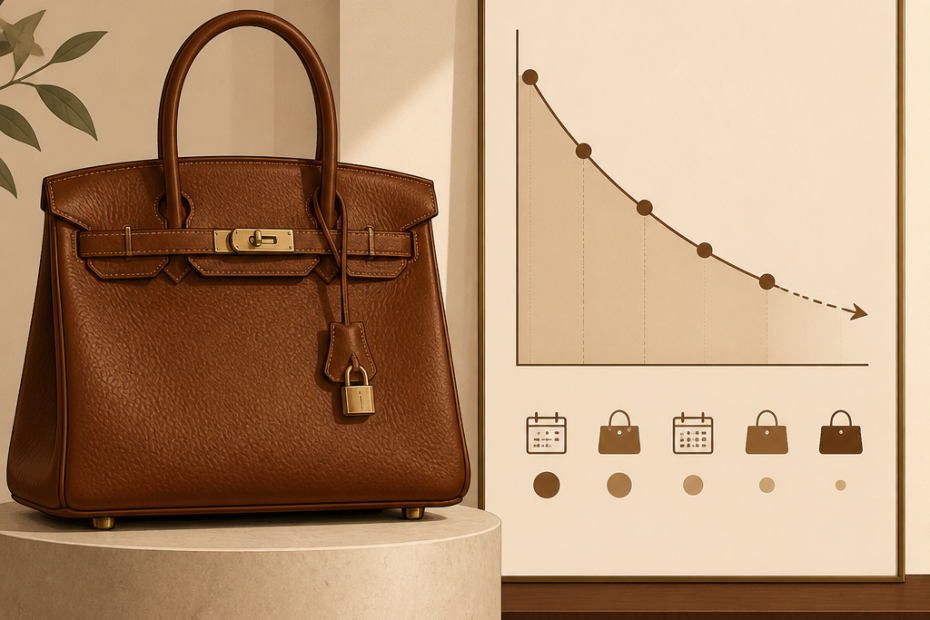
Some bags are purchases; others are investments. An investment piece is a handbag you buy once, use for a decade, and still love — the opposite of fast-fashion turnover. The math is simple and compelling: a $150 leather messenger used 300 times a year for 10 years costs less per use than a $30 fast-fashion bag replaced every season. This guide explains what makes a bag a genuine investment piece, which materials and construction details matter, and how to choose one that fits both your style and your budget.
Investment Piece Handbags: What Makes a Bag Worth Keeping for a Decade
Sponsored: This article features products from brand partner campaigns on Amazon. We may earn a commission from qualifying purchases made through the product links in this post, at no extra cost to you.
The Cost-Per-Use Math
The honest way to judge a bag is cost per use, not sticker price. A $150 bag worn 200 times a year for 10 years costs about 7.5 cents per wear. A $40 bag that falls apart in two years — 80 wears total — costs 50 cents per wear and ends up in a landfill. The expensive bag is six times cheaper per use and generates a fraction of the waste. That is the entire case for investment pieces, and it is why “buy less, choose well” is not just an aesthetic — it is arithmetic.
The flip side is also true: a $150 bag you never wear because it does not fit your life is the worst purchase of all. Investment pieces must earn their cost per use through daily utility.
Materials That Age Well (and Ones That Do Not)
The material decides whether a bag improves with time or degrades:
| Material | How it ages | Investment verdict |
|---|---|---|
| Full-grain leather | Develops a rich patina, softens, lasts decades | The gold standard |
| Waxed canvas | Wears in, waterproofs with re-waxing, lasts 10+ years | Excellent |
| Top-grain leather | Good, but thinner than full-grain | Good value |
| Genuine/bonded leather | Chips, peels, and degrades | Avoid — it is marketing, not quality |
| PVC/PU “vegan leather” | Cracks and flakes within a few years | Not an investment |
| High-quality plant-based (cork, apple, Piñatex) | Durable when well-made | Promising, verify construction |
Full-grain leather is the investment benchmark because it is the one material that genuinely improves with use — and because it can be repaired, conditioned, and re-stitched for decades.
Construction Details That Predict Longevity
Material is half the story; construction is the other half. Inspect these before buying:
- Stitching — tight, even, dense stitches (7–10 per inch) outlast loose stitching. Look at the stress points: handles, strap attachments, and corners.
- Hardware — solid brass or zinc alloy hardware ages well; plated metal chips. A broken zipper or buckle is the most common reason a good bag gets retired.
- Lining — a durable lining (cotton twill, ripstop) that is stitched, not glued, survives years of use.
- Reinforced stress points — bar tacks or rivets at handle and strap attachments prevent the failures that kill bags.
- Repairability — can the strap be replaced? Is the hardware standard? A bag designed to be repaired is designed to last.
Function: The Forgotten Investment Factor
An investment piece must be used to be worth it, so function matters as much as materials. A bag that fits your actual carry — laptop sleeve, water bottle pocket, organized interior — will be worn daily; a beautiful bag that does not fit your life sits on a shelf losing value every day it is unused. Choose pockets and compartments for the way you actually live, not the way a catalog imagines you do.
Versatility compounds the investment: a neutral color and classic silhouette work for work, weekends, and travel, multiplying the uses per year and driving cost-per-use toward zero.
Verifiable Quality: What to Check Before You Buy
- Read the material specifications — the actual materials, not adjectives.
- Look at photos of the bag after a year of use — reviews and brand galleries reveal how it ages.
- Check the warranty and repair policy — a brand that repairs its bags stands behind them.
- Feel the leather and hardware in person when possible; online, look for detailed video reviews.
- Confirm the brand’s production story — a named workshop or certification is a stronger signal than a vague “quality craftsmanship” line.
Brands that publish material details, construction specifics, and repair options are the ones most likely to deliver a true investment piece.
See the sustainable leather messenger bag on Amazon
See the tactical messenger bag on Amazon
Frequently Asked Questions
How much should I spend on an investment bag? Spend what your cost-per-use math justifies — for most people, $100–300 buys a genuinely durable full-grain leather or waxed canvas bag that lasts a decade. Beyond that, you are paying for brand, not function.
Is a designer bag an investment? Financially, almost never — most bags, including luxury ones, depreciate. The “investment” in an investment piece is the cost-per-use savings and longevity, not resale value. A well-made mid-range bag used daily beats a luxury bag that sits in a closet.
Can I repair an investment bag? Most quality bags can be re-stitched, re-conditioned, and re-hardware’d for years. Look for repairable construction from the start — sewn linings, replaceable straps, standard hardware — and find a local repair shop before you need one.
Is vegan leather ever an investment? High-quality plant-based materials (cork, apple, Piñatex) can be durable, but many “vegan leathers” are PVC/PU that crack and flake. Verify the actual material and construction; a genuinely durable plant-based bag is a legitimate choice, a flaking PU bag is not.
What is the single best investment-bag material? Full-grain leather, without much debate: it is the most durable, most repairable, and the only material that visibly improves with age. Waxed canvas is the strong runner-up for a lighter, more casual daily bag.
Key Takeaways
- An investment piece is judged by cost per use, not sticker price.
- A $150 bag worn 200 times a year for a decade costs about 7.5 cents per wear.
- Full-grain leather and waxed canvas age well; cheap materials fail fast.
- Verify stitching, hardware, and materials before buying.
- A bag that fits your daily life earns its cost per use — one that doesn’t is the worst purchase.
Disclosure: This article contains sponsored content and product links. As an Amazon Associate, we may earn from qualifying purchases. Prices and availability were checked at the time of writing and may change.