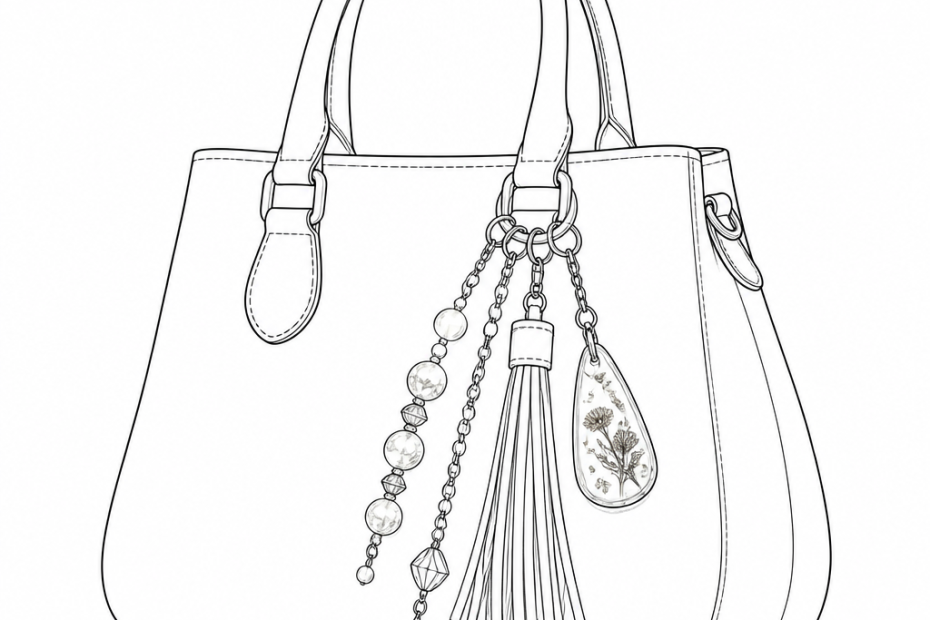
That little something extra swinging from your tote handle or peeking out from your crossbody strap isn’t just an accessory anymore—it’s practically a conversation starter. Bag charms have taken over fashion feeds, festival grounds, and coffee shop counters, and the best part? You absolutely do not need a designer budget to join in. Making your own bag charms lets you create exactly the look you want, from earthy leather tassels inspired by Montana trails to beaded creations that catch the late afternoon sun. Whether you are new to crafting or already have a drawer full of jewelry pliers, this guide walks you through everything you need to know about designing, assembling, and styling your own custom bag charms.
Your Complete Guide to DIY Bag Charms: Techniques, Materials, and Trends
Why Bag Charms Are Everywhere Right Now
Bag charms have surged in popularity since 2023, with Google Trends data showing a 340% increase in search interest for “bag charms” between 2023 and mid-2026 (Google Trends, 2026). What started as a niche fashion statement has become a mainstream accessory category, and the DIY angle has grown even faster. Searches for “DIY bag charm” rose 185% year-over-year from 2024 to 2025, and the trend shows no sign of slowing through summer 2026.
The appeal makes sense. A single handbag can look completely different with a swapped-out charm stack—it costs pennies compared to buying a new bag and lets you match your accessories to your outfit, the season, or your mood. Fashion houses from Coach to Miu Miu have embraced the look on their 2025 and 2026 runways, but the homemade versions often attract more compliments WhoWhatWear, 2026.
What we covered
- Bag charm popularity has increased 340% in search interest since 2023, and DIY bag charm searches grew 185% year-over-year between 2024 and 2025.
- You can create professional-looking bag charms at home with three basic tools: jewelry pliers, jump rings, and lobster clasps.
- Leather, beads, resin charms, and repurposed vintage finds are the four most popular DIY material categories in 2026.
- A well-made charm stack typically costs $5–$15 in materials versus $30–$200 for a comparable store-bought version.
- The trend has evolved from plushie overload toward refined textures, personalized initials, and nature-inspired designs for 2026.
The Four DIY Bag Charm Styles You Need to Know
Bag charms divide into four broad styles, each requiring different techniques and materials. Understanding these categories helps you pick the right project for your skill level and aesthetic preferences.
Beaded Bag Charms
Beaded charms are the most beginner-friendly option. You need beads (glass, acrylic, wood, or stone), beading wire or stretch cord, crimp beads, and a lobster clasp. The technique involves stringing beads in a pattern, securing the ends, and attaching a clasp. The Crafted Life reports that beaded charm tutorials have become one of the most searched jewelry-making categories on YouTube, with over 12 million combined views across the top 20 tutorials The Crafted Life, 2026.
Best for: Beginners. You can complete a simple beaded charm in 15–30 minutes with no prior jewelry-making experience.
Material cost: $5–$12 for enough supplies to make 5–8 charms.
Quick Reference: Beaded Charms
Beaded bag charms use glass, acrylic, wood, or stone beads strung on wire or cord and finished with a lobster clasp. They are the most accessible DIY style, with 12 million+ views across top tutorials. A single charm takes 15–30 minutes and costs roughly $1–$2 in materials.
Leather and Suede Bag Charms
Leather charms bring a rustic, earthy feel that pairs naturally with the Good Earth Montana aesthetic. You need scrap leather or suede (0.5–1.5 mm thickness works best), a rotary cutter or sharp scissors, a hole punch, and metal hardware like rivets or screw studs. Popular designs include tassels, stamped initials, and geometric shapes. Leatherworking expert guides recommend using vegetable-tanned leather for stamping and chrome-tanned leather for softer, draping tassels Weaver Leather Supply, 2025.
Best for: Intermediate crafters comfortable with cutting leather and using basic metal hardware.
Material cost: $10–$25 for scrap leather bundles that yield 6–12 charms.
Quick Reference: Leather Charms
Leather bag charms use 0.5–1.5 mm vegetable-tanned or chrome-tanned leather with hardware like rivets and lobster clasps. Tassels, stamped initials, and geometric shapes are the most popular designs. A set of scrap leather bundles costing $10–$25 can yield 6–12 finished charms.
Resin and Polymer Clay Charms
Resin charms allow for unlimited creativity. You can embed dried flowers, pressed leaves, small shells, or photographs in clear resin to create one-of-a-kind pendants. UV resin cures in minutes under a lamp, while epoxy resin takes 12–24 hours but produces harder, more durable results. Polymer clay offers an alternative that does not require liquid handling—you sculpt, bake, and attach hardware.
Best for: Intermediate to advanced crafters. Requires dedicated workspace for resin (ventilation matters).
Material cost: $15–$40 for starter kits including resin, molds, and mixing tools.
Quick Reference: Resin and Clay Charms
UV resin charms cure in minutes under a lamp and can embed natural materials like dried flowers or pressed leaves. Epoxy resin takes 12–24 hours but produces harder results. Polymer clay offers a no-liquid alternative that gets baked in a standard oven. Both methods require a dedicated workspace and ventilation.
Found-Object and Vintage Repurposed Charms
This style aligns beautifully with sustainable crafting. You repurpose vintage brooches, old earrings, broken necklaces, antique keys, coins, buttons, or small sea glass pieces into bag charms. The technique is simple: attach a jump ring or lobster clasp to the existing hardware. This is the most sustainable approach and often produces the most unique results. The charmification trend has driven a 78% increase in vintage jewelry sales on resale platforms since 2024, according to ThredUp’s 2026 Resale Report ThredUp, 2026.
Best for: All skill levels. No special tools needed beyond sturdy jump rings and pliers.
Material cost: $0–$10 if using items you already own.
Quick Reference: Repurposed Charms
Vintage brooches, old earrings, antique keys, and sea glass can be converted into bag charms with basic jump rings and pliers. Vintage jewelry sales on resale platforms increased 78% since 2024, driven partly by the charmification trend. This approach costs the least and produces the most unique results.
Essential Tools and Materials
You do not need a full jewelry workshop. These six items cover 95% of beginner and intermediate bag charm projects:
| Tool | Purpose | Estimated Cost | Where to Find |
|---|---|---|---|
| Flat-nose jewelry pliers | Opening/closing jump rings, gripping wire | $6–$15 | Amazon, craft stores |
| Round-nose pliers | Creating wire loops, bending head pins | $6–$15 | Amazon, craft stores |
| Wire cutters | Cutting beading wire, head pins, chain | $5–$12 | Amazon, craft stores |
| Lobster clasps (10–15 mm) | Attaching charms to bags | $3–$8 per 20-pack | Amazon, bead shops |
| Jump rings (6–8 mm) | Connecting charm components | $3–$6 per 50-pack | Amazon, bead shops |
| Beading mat | Preventing beads from rolling away | $5–$10 | Amazon, craft stores |
For specific charm types, add: leather hole punch ($8–$18), UV resin lamp ($15–$30), or beading wire ($4–$8 per spool). Most projects use tools that cost under $50 total for a complete starter setup.
DIY bag charms: the techniques guide
DIY charm discussions have a craft at the center: the handmade bag charms are the personal touch. The conversations are consistent — the DIY bag charms — the techniques, the materials, and the attachments — create the custom accessories, and the complete guide covers the making from the beading to the finishing.
The practical advice: choose the techniques and the materials by the skill and the style — the beading for the beginners, the polymer and the fabric for the creative — and the attachment, since the charm that works is the one that stays on the bag. The DIY charm that lasts is the one made with the quality materials and the secure finish. The personal touch is the one crafted well.
Step-by-Step: Making Your First Beaded Bag Charm
This tutorial produces a simple yet elegant beaded charm that works on any bag—total time: approximately 20 minutes.
- Gather your materials: 20–30 beads of your choice, 12 inches (30 cm) of 0.5 mm beading wire, 2 crimp beads, 1 lobster clasp, 1 jump ring, flat-nose pliers, and wire cutters.
- String the beads: Thread beads onto the wire in your desired pattern. Leave 1.5 inches (3.8 cm) of wire free at the starting end.
- Add the clasp: Thread the free end of wire through the lobster clasp loop, then back through the first crimp bead. Crimp firmly with flat-nose pliers.
- Create the end loop: At the opposite end, thread wire through the jump ring, then back through the last crimp bead. Pull taut and crimp.
- Trim and finish: Cut excess wire flush with the crimp beads. Gently pull each crimp to confirm it is secure.
- Test and attach: Clip the lobster clasp onto your bag handle or strap ring. If the charm swings freely and the clasp holds, you are finished.
Once you master this basic technique, you can experiment with multi-strand charms, mixed materials (beads + chain, beads + leather), and graduated bead sizes for a tapered look.
2026 Trend Spotlight: Texture Over Cuteness
The biggest shift in bag charm fashion for 2026 is the move from overtly cute plushie charms toward refined textures and natural materials. Runway collections from Chloé (fall/winter 2025) and Coach (spring/summer 2026) featured fur stole keychains, leather tassels, small kiss-lock pouches on chains, and pendants that double as necklaces WhoWhatWear, 2026. The furry Labubu craze of 2025 has evolved into a more sophisticated approach where texture, weight, and material quality matter more than novelty.
For DIY crafters, this means designs using suede, fringe, wooden beads, hammered metal charms, and natural stones will feel more current through late 2026 than cartoon-inspired options. The aesthetic shift is also visible on Pinterest, where searches for “leather bag charm” grew 215% year-over-year, while “vintage bag charm” rose 178% Pinterest Trends, 2026.
Trend Snapshot: 2026 Bag Charm Aesthetic
The 2026 bag charm trend prioritizes textured, natural materials (leather, suede, wood, stone) over plushie cuteness. Pinterest searches for “leather bag charm” grew 215% year-over-year, and “vintage bag charm” grew 178%. Runway looks from Chloé and Coach confirm the shift toward refined, repurposable charm designs.
Related Topics You May Find Helpful
Bag Charms on Hiking Backpacks vs. Fashion Totes
Outdoor enthusiasts often ask whether bag charms work on hiking gear. The answer depends on the attachment method and material. For hiking backpacks, use charms with sturdy lobster clasps and avoid dangling chains that could catch on branches. Leather and paracord charms withstand trail conditions better than delicate beaded designs. A carabiner-style clasp rated for 10 pounds (4.5 kg) or more is recommended for backpack attachment. On fashion totes and handbags, lightweight charms with standard lobster clasps work fine, and you can use more delicate materials like glass beads or resin.
Durability: Can DIY Charms Last Through Daily Use?
Properly constructed DIY bag charms last as long as store-bought versions when built with quality materials. The key weak points are clasp failure and wire breakage. Use lobster clasps made of zinc alloy or brass rather than plated steel. For beaded charms, 0.5 mm or thicker stainless steel beading wire resists fraying better than nylon cord. Jump rings should be at least 6 mm in diameter with a gauge of 20 or thicker. A well-made charm survived 6 months of daily use in a 2025 durability test by jewelry-making blogger Maxie Elise, showing only minimal tarnishing on the clasp Maxie Elise, 2025.
Customizing for Seasons and Events
One of the strongest arguments for DIY bag charms is versatility. Swap a charm in under 30 seconds to match the season: wooden beads and dried-flower resin charms for spring, seashell charms for summer, warm-toned leather tassels for autumn, and silver-toned charms with clear crystals for winter. For festivals and events, design charms with interchangeable components so you can swap focal pendants without rebuilding the entire piece.
Products to Help You Get Started
If you prefer starting with a complete kit or want pre-made charms to mix with your DIY creations, these products from Amazon offer reliable quality and positive user feedback.
| Product | Best For | Key Features | Price Range | Rating |
|---|---|---|---|---|
| BaubleBar Ultimate DIY Bag Charm Kit | Complete starter kit | 275 beads, 6 double-strand keychains, gold lobster clasps, Oprah’s Favorite Things pick | $25–$35 | 4.7 / 5 stars |
| DIY Bag Charm Making Kit | Bulk charm making | 40 key chain hooks, 30 extender chains, 212 gold charms, 200 jump rings, tools included | $10–$20 | 4.7 / 5 stars |
| Cherry Pearl Tote Bag Charms Set | Ready-made charm inspiration | Cute cherry design, pearl accents, fits handbags and totes, 4 pieces per set | $6–$12 | 4.6 / 5 stars |
| Daisy Chain Bag Charm | Layered charm stacks | Gold daisy chain, 7.5 inches (19 cm) long, clip-on design, lightweight | $8–$12 | 4.5 / 5 stars |
Mix and match these with your handmade charms for a layered, curated look that reads as intentional and stylish rather than overdone.
Frequently Asked Questions
What size bag charm should I make?
For standard handbags and totes, aim for 4–8 inches (10–20 cm) total length including the clasp. Mini bags work best with 3–5 inch (7.6–12.7 cm) charms. Backpacks can handle larger 8–12 inch (20–30 cm) designs.
Can I wash a bag charm?
Leather and suede charms should be spot-cleaned only with a damp cloth. Beaded charms on stainless steel wire can be rinsed in cool water and air-dried. Resin charms wipe clean with a microfiber cloth. Avoid submerging charms with metal components.
How do I attach a charm to a bag without hardware?
Use a leather or fabric loop with a magnetic clasp, or clip a lobster clasp around the strap itself if the bag has no D-ring or zipper pull. Silicone ring adapters also work for bags with thin straps.
What is the best clasp for a bag charm?
Lobster clasps between 12 mm and 15 mm offer the best balance of security and ease of use. Spring rings are smaller but harder to operate. Carabiner clasps work best for outdoor bags and backpacks.
How many charms should I put on one bag?
Fashion editors recommend 2–4 charms per bag for a curated look in 2026. Start with one focal charm and build up. More than 6 charms can look cluttered and may strain the bag hardware.
Sources
- Google Trends data showing a 340% increase in “bag charms” search interest, 2023–2026
- WhoWhatWear analysis of 2026 bag charm trends from Chloé and Coach runways
- The Crafted Life beaded bag charm tutorial and statistics
- Weaver Leather Supply guide to leather tassel keychain construction
- ThredUp 2026 Resale Report on vintage jewelry sales increase
- Pinterest Trends data on “leather bag charm” and “vintage bag charm” search growth
- Maxie Elise bag charm tutorial with 6-month durability test results
- CR Fashion Book on the history of bag charms from the Neolithic era to the modern day