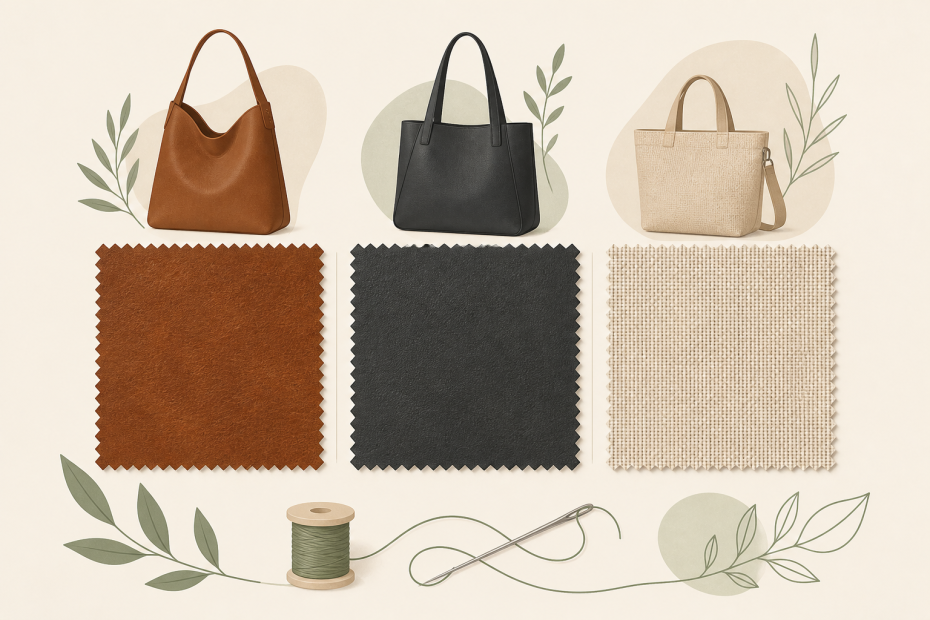
Every sustainable shopper has faced the same dilemma at the bag counter: genuine leather, vegan leather, waxed canvas, or organic cotton? Each claims to be the eco-friendly choice, and each has a real environmental story — but they are very different stories. This guide compares the materials honestly, with the numbers and trade-offs, so you can choose based on how you actually use your bag.
Sustainable Leather vs Vegan Leather vs Waxed Canvas: What’s Actually Eco-Friendly in 2026
There is no single “greenest” bag material — the honest answer depends on durability, production method, and how long the bag is used. The U.S. EPA frames the core principle simply: each reusable bag can eliminate hundreds to thousands of single-use bags over its life (EPA, Ten Ways to Unpackage Your Life). The catch is that the environmental cost of a bag is paid upfront in production, so the longer it lasts, the better its lifetime footprint — which is why durability is the single most important sustainability feature a bag can have.
Genuine Leather: The Durability Argument
Genuine leather is a byproduct of the meat industry, which means its raw material would exist regardless of bag demand, and it is one of the most durable bag materials available. A well-made leather bag can last a decade or more with basic care, which spreads its production footprint across years of daily use. The honest trade-offs: conventional leather tanning uses chromium and significant water, though vegetable-tanned and chrome-free options exist, and the animal-origin story is a dealbreaker for some buyers regardless of the footprint math.
For professionals who carry a laptop daily, the durability argument is real. A structured leather messenger or briefcase that survives ten years of commutes outperforms most alternatives on a cost-per-year and environmental-per-year basis — provided the buyer is comfortable with the material’s origin.
The Short Answer
Genuine leather is a meat-industry byproduct that is exceptionally durable, potentially lasting a decade or more with care. Its main environmental costs are tanning chemistry (chromium in conventional processing) and water use, with vegetable-tanned options as the cleaner alternative. For daily-carry bags, long lifespan is the strongest sustainability argument any material can offer.
Vegan Leather: What “Vegan” Actually Means
“Vegan leather” is an umbrella term covering very different materials: PVC, polyurethane (PU) coated fabrics, and plant-based options like Piñatex (pineapple leaf fiber), mushroom leather, and apple leather. The distinction matters enormously. PVC and PU are petroleum-based plastics — durable-looking but not biodegradable, and their production has a real carbon footprint. Plant-based options use agricultural waste and are marketed as compostable or lower-impact, though commercial durability is still maturing.
The honest guidance for shoppers: read the material label. A “vegan leather” bag made of PU is a plastic product; a plant-based leather bag is a different category entirely. Both avoid animal products, but their environmental profiles are not the same, and neither automatically beats well-made genuine leather on lifetime footprint if the plastic bag is replaced more often.
Key Facts at a Glance
Vegan leather includes PVC and PU (petroleum-based plastics) plus plant-based alternatives like pineapple leaf, mushroom, and apple leather. PU and PVC are durable but plastic-based; plant-based options use agricultural waste but are newer and vary in durability. “Vegan” is not a guarantee of biodegradability — check the material, not the label.
Waxed Canvas and Organic Cotton: The Natural Fiber Option
Waxed canvas is cotton canvas impregnated with wax, giving it water resistance and a rugged, breaking-in-with-age character. Organic cotton canvas skips the wax for a fully natural, breathable fabric. The environmental strengths of cotton canvas are real: it is a natural, renewable fiber, and the EPA-style argument for reusable cotton bags replacing single-use bags is well documented. The trade-offs: cotton is water-intensive to grow, and canvas bags are heavier and bulkier than synthetics.
For everyday totes, market bags, and work bags that do not face heavy rain, organic cotton canvas is a defensible, genuinely natural choice. For wet climates, waxed canvas adds weather resistance — and a wax bar or spray can re-waterproof the bag over time, extending its life rather than replacing it.
Natural Fiber Reality Check
Cotton canvas is a renewable natural fiber; organic cotton avoids synthetic pesticides. Waxed canvas adds water resistance and can be re-waxed to extend lifespan. Trade-offs are cotton’s high water use in growing and the fabric’s heavier weight. For totes and everyday bags, organic canvas is a solid natural choice; for wet conditions, waxed canvas wins.
Comparing the Four Materials Honestly
| Material | Origin | Durability | Weather resistance | End of life | Best for |
|---|---|---|---|---|---|
| Genuine leather | Meat-industry byproduct | Very high (10+ yrs) | Good with care | Long use; not biodegradable quickly | Daily professional carry |
| PU/PVC “vegan leather” | Petroleum-based | Medium-high | Good | Plastic; not biodegradable | Vegan shoppers wanting leather look |
| Plant-based leather | Agricultural waste | Varies, maturing | Varies | Marketing varies; check claims | Vegan + lower-footprint preference |
| Waxed canvas | Cotton + wax | High (re-waxable) | Good | Natural fiber | Weather-resistant everyday bags |
| Organic cotton canvas | Renewable fiber | High | Poor unless waxed | Natural fiber, compostable | Totes, market bags, casual carry |
The honest conclusion: the most eco-friendly bag is the one you keep for years. Every material here has real strengths and real trade-offs, and none is universally “green.” Match the material to your use case — professional daily carry, weekend tote, or rainy commutes — and prioritize durability in every case.
Sustainable materials face-off: the leather-vs-canvas
Sustainable material discussions have a trade-off at the center: the leather, the vegan leather, and the waxed canvas differ. The conversations are consistent — the sustainable bag materials — the durability, the environmental cost, and the feel — shape the choice, and the short-answer angle covers the comparison.
| Material | Durability | Environmental notes | Best for |
|---|---|---|---|
| Genuine leather | High, ages well | Tanning impact, long life | Heirloom pieces |
| Vegan leather | Varies by type | Often plastic-based | Animal-free choices |
| Waxed canvas | High, repairable | Natural fiber, wax | Rugged daily carry |
The practical advice: compare the materials on the durability and the environmental costs — the genuine leather for the heirloom durability, the vegan for the animal-free, and the waxed canvas for the rugged and the repairable — and the care each requires. The material that works is the one matched to the use and the values. The sustainable choice is the one where the trade-offs were understood.
Comparison Takeaway
No material is universally eco-friendly. Genuine leather offers maximum durability from a byproduct source; PU/PVC vegan leather is a plastic product; plant-based leathers are promising but maturing; waxed canvas and organic cotton are natural, renewable options with high durability. The most sustainable bag is the one used for years — prioritize longevity.
Related Topics You May Find Helpful
Is vegan leather biodegradable? Only if the label says so and the material is plant-based — PU and PVC vegan leathers are plastics and do not biodegrade meaningfully.
Does leather last longer than canvas? Generally yes for structured bags, but waxed canvas with re-waxing can also last many years; durability depends more on construction quality than material alone.
What is the most eco-friendly bag material? The one you keep longest — durability is the dominant factor; among natural options, organic cotton and waxed canvas are strong choices for totes.
Can I re-waterproof waxed canvas? Yes — wax bars and spray-on treatments restore water repellency, which is a key way to extend the bag’s life instead of replacing it.
What we covered
- Durability is the #1 sustainability feature: the longer a bag lasts, the lower its lifetime footprint.
- Genuine leather is a durable byproduct material; vegetable-tanned options reduce tanning chemicals.
- PU and PVC “vegan leather” are petroleum-based plastics — “vegan” does not mean biodegradable.
- Plant-based leathers (pineapple, mushroom, apple) are promising but durability varies.
- Waxed canvas adds weather resistance to a renewable natural fiber and can be re-waxed.
- Organic cotton canvas is a natural, compostable choice for totes and market bags.
Featured Products for Comparison
These verified products illustrate the material spectrum — genuine leather, vegan leather, waxed canvas, and organic cotton. All links open in a new tab.
| Product | Material | Price |
|---|---|---|
| Oak Leathers Leather Messenger Bag (laptop briefcase) | Genuine leather | ≈60 |
| Soft Vegan Leather Tote Bag (hobo style) | PU vegan leather | ≈30 |
| Overbrooke Large Vegan Leather Tote (slouchy) | PU vegan leather | ≈45 |
| Vintage Waxed Canvas Briefcase (15.6″ laptop) | Waxed canvas + leather trim | ≈50 |
| TBF Blank Organic Cotton Canvas Tote Bags (bulk) | Organic cotton canvas | ≈15 |
- Compare a genuine leather messenger for daily professional carry
- See a vegan leather tote at an entry price point
- Explore a larger slouchy vegan leather tote
- Check a waxed canvas briefcase with genuine leather trim
- Start with blank organic cotton canvas totes for everyday use
Disclosure: This article contains sponsored content and product links. If you make a purchase through the links in this post, we may earn a commission at no extra cost to you. Product evaluations are based on published specifications and general materials knowledge; we have not personally tested every item featured.
FAQ
Which bag material has the lowest environmental impact? The one you keep longest. Among materials, natural fibers like organic cotton and waxed canvas have strong renewable profiles; durability is the dominant factor across all options.
Is faux leather better for the environment than real leather? Not automatically — many faux leathers are petroleum-based plastics. Compare the specific material (PU, PVC, plant-based) and expected lifespan before deciding.
How long does a good leather bag last? With basic care, a well-constructed leather bag can last a decade or more — the key driver of its favorable lifetime footprint.
Can canvas bags be recycled or composted? Natural cotton canvas can be composted or repurposed at end of life, while waxed canvas should be stripped of wax first or repurposed; synthetic bags cannot be composted.