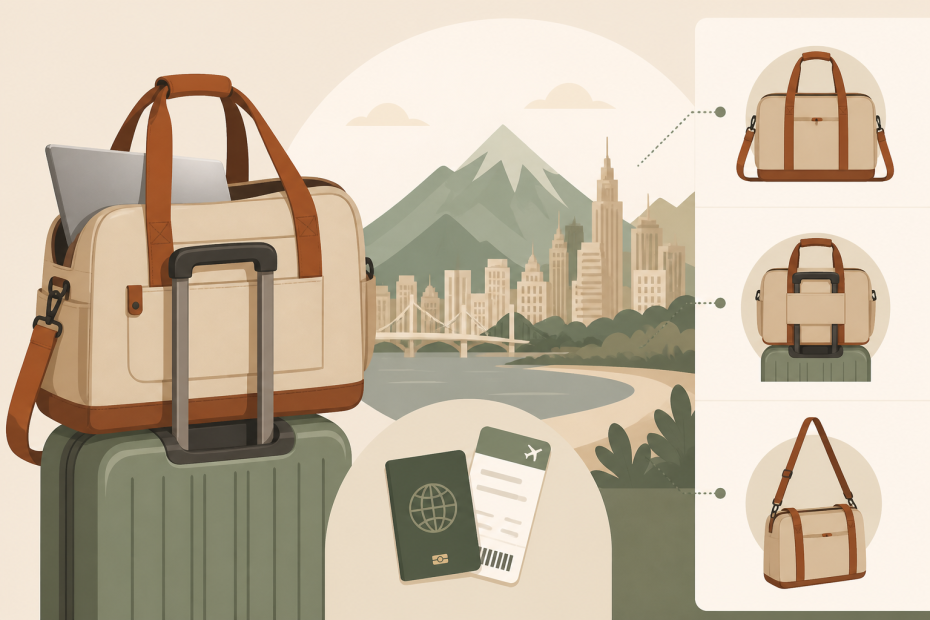
Traveling with a sustainable bag is about choosing one versatile bag that works for multiple uses — a carry-on, a daypack, and an everyday bag. The most sustainable travel bag is a quality canvas or leather duffel, backpack, or messenger that can handle the rigors of travel while looking appropriate at dinner.
Sustainable Travel Bags: How to Choose One Bag for Carry-On, Daypack, and Everyday
Sponsored: This article features products from brand partner campaigns on Amazon. We may earn a commission from qualifying purchases made through the product links in this post, at no extra cost to you.
The most sustainable travel bag replaces three: a carry-on, a daypack, and an everyday bag. A versatile bag that transitions from airport to city to trail reduces the total number of bags you need to own. Key features: carry-on size, comfortable straps, laptop sleeve, organized interior, water-resistant exterior.
The Short Answer
Choose a single bag that fits carry-on size, has comfortable straps, and organizes your laptop, toiletries, and clothing. A canvas duffel with backpack straps is most versatile. Made from durable, weather-resistant material with stitched construction that can be repaired.
Essential Travel Bag Features
| Feature | Why it matters |
|---|---|
| Carry-on size | Fits airline overhead limits |
| Luggage pass-through | Slides over rolling suitcase handles |
| Padded laptop sleeve | Protects devices in transit |
| Secure closure | Keeps contents safe in crowds |
| Water-resistant exterior | Survives weather and airport drops |
| Wet pocket | Isolates toiletries |
Features for Travel
Luggage pass-through sleeve, secure closure, water-resistant exterior, padded laptop sleeve, zippered document pocket, wet pocket for toiletries. Padded, adjustable strap. Light enough for extended carrying.
Featured Products
A durable canvas messenger with padded laptop sleeve: See the messenger bag on Amazon.
A compact crossbody for daypack and evening use: See the compact crossbody bag on Amazon.
FAQ
What is the best sustainable material for a travel bag? Waxed canvas — water-resistant, durable, lightweight, repairable. Full-grain leather is more durable but heavier.
Can I use a messenger bag as a carry-on? Yes — a large messenger with padded laptop sleeve fits carry-on size restrictions. Should be expandable for the return trip.
How do I care for a travel bag on the road? Clean spills immediately with a damp cloth. Re-wax waxed canvas after extended rain exposure.
One-Bag Travel: The Case for a Single Sustainable Carry
One-bag travel is the purest expression of sustainable travel — one carry-on bag replaces the checked suitcase, the personal item, and the day bag, and it forces the packing discipline that makes travel lighter in every sense. The one-bag philosophy works because most travelers pack twice what they need: a 30–40 liter bag carries a week of travel clothing with a capsule approach — versatile layers, quick-dry fabrics, and items that serve multiple purposes. The sustainability angle is real: one bag means less weight on every flight (lower fuel use), no single-use plastic bags at security, and a wardrobe system that resists impulse purchases on the road. The practical framework: choose one bag that fits the airline’s carry-on limits, pack for a week and wash on the road, and treat the bag as the constant — the same sustainable carry for every trip, for years.
Choosing the Travel Bag: Size, Security, and Organization
Travel bags earn their place on three criteria: size, security, and organization. Size: the bag must fit airline carry-on limits (typically 22×14×9 inches) while holding your actual packing system — check the limits of the airlines you fly most, since they vary. Security: look for lockable zippers, hidden pockets, and anti-theft details for crowded transit; the bag you carry through train stations and airports needs to protect its contents as much as carry them. Organization: dedicated compartments for a laptop, documents, and daily items keep the one-bag system workable — a bag with good organization is a bag you can live out of for a week. The material choice closes the loop: a durable, repairable bag in leather or heavy canvas is the sustainable travel purchase — one bag, decades of trips, no replacements.
Travel Bag Materials: The Weather and Wear Test
Travel bags face conditions that home bags never do — transit, weather, luggage handling, and constant packing and unpacking — and the material must survive the test. Leather handles the role beautifully when treated: water-resistant, durable, and it develops a travel patina that tells the story of the trips. Heavy canvas (especially waxed) shrugs off weather and abrasion at lighter weight. Nylon offers the lightest, most weather-resistant option, at the cost of a less refined look. The material’s end-of-life also matters on the road: natural materials compost or recycle eventually, while nylon persists. The practical framework for the travel bag: choose a material that survives weather and wear, carries the look you want at your destinations, and will still be serviceable after a decade of trips — the travel bag that lasts is the sustainable travel bag.
Key Takeaways
- The most sustainable travel bag replaces a carry-on, daypack, and everyday bag.
- A canvas duffel with backpack straps is the most versatile single option.
- Prioritize carry-on size, comfortable straps, laptop sleeve, and a secure closure.
- Water-resistant, repairable materials survive travel conditions.
- One quality bag used across roles reduces total production and waste.
Disclosure: This article contains sponsored content and product links. If you make a purchase through the links in this post, we may earn a commission at no extra cost to you. Product evaluations are based on published specifications, industry guidance, and verified owner feedback.