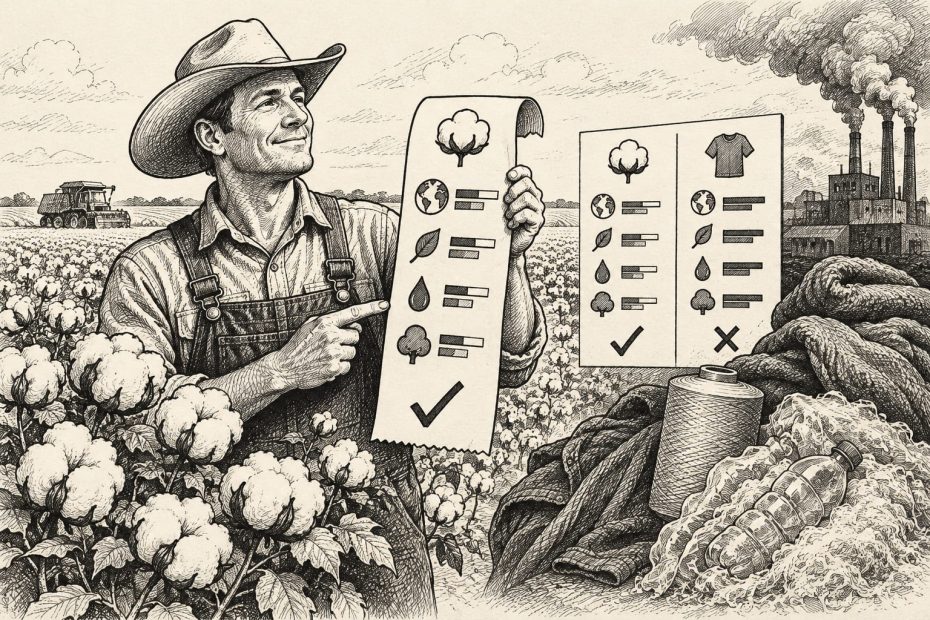
Cotton Incorporated and the Lifestyle Monitor survey program shared new numbers on U.S. cotton farming, and the story is simple: American cotton growers have cut their environmental footprint for decades, and most shoppers still trust natural fibers over synthetics. The report, covered by WWD, pulls from Cotton Incorporated’s 2023 National Resource Survey and the 2025 Global Lifestyle Monitor Survey of over 13,000 people worldwide.
Here at Good Earth Montana, we care about this because we build our picks around honest materials like full-grain leather, canvas, and hemp. Knowing what goes into your clothes matters just as much as knowing what goes into your bag.
How to spot it
Jesse Daystar, Cotton Incorporated’s chief sustainability officer, laid out four decades of progress in U.S. cotton farming:
- Soil loss down 45 percent
- Irrigation water-use efficiency up 58 percent
- Greenhouse gas emissions down 25 percent
- Land-use efficiency up 30 percent
Daystar also pointed to growing use of conservation tools. Cover crop use jumped from 20 percent of growers in 2015 to 48 percent in 2023. No-till and strip-till farming rose too, while old-style conventional tillage dropped.
A separate life cycle study, done by WSP USA Inc. for Cotton Incorporated, found something notable. Once you count the carbon cotton plants store naturally, U.S. cotton production comes out net negative on emissions, at -0.264 kilograms of CO2 per kilogram of fiber grown. That’s a big deal, because it sets cotton apart from petroleum-based fabrics like polyester, which never store carbon at all.
On the shopper side, the numbers back up what cotton farmers are selling. In the 2025 survey:
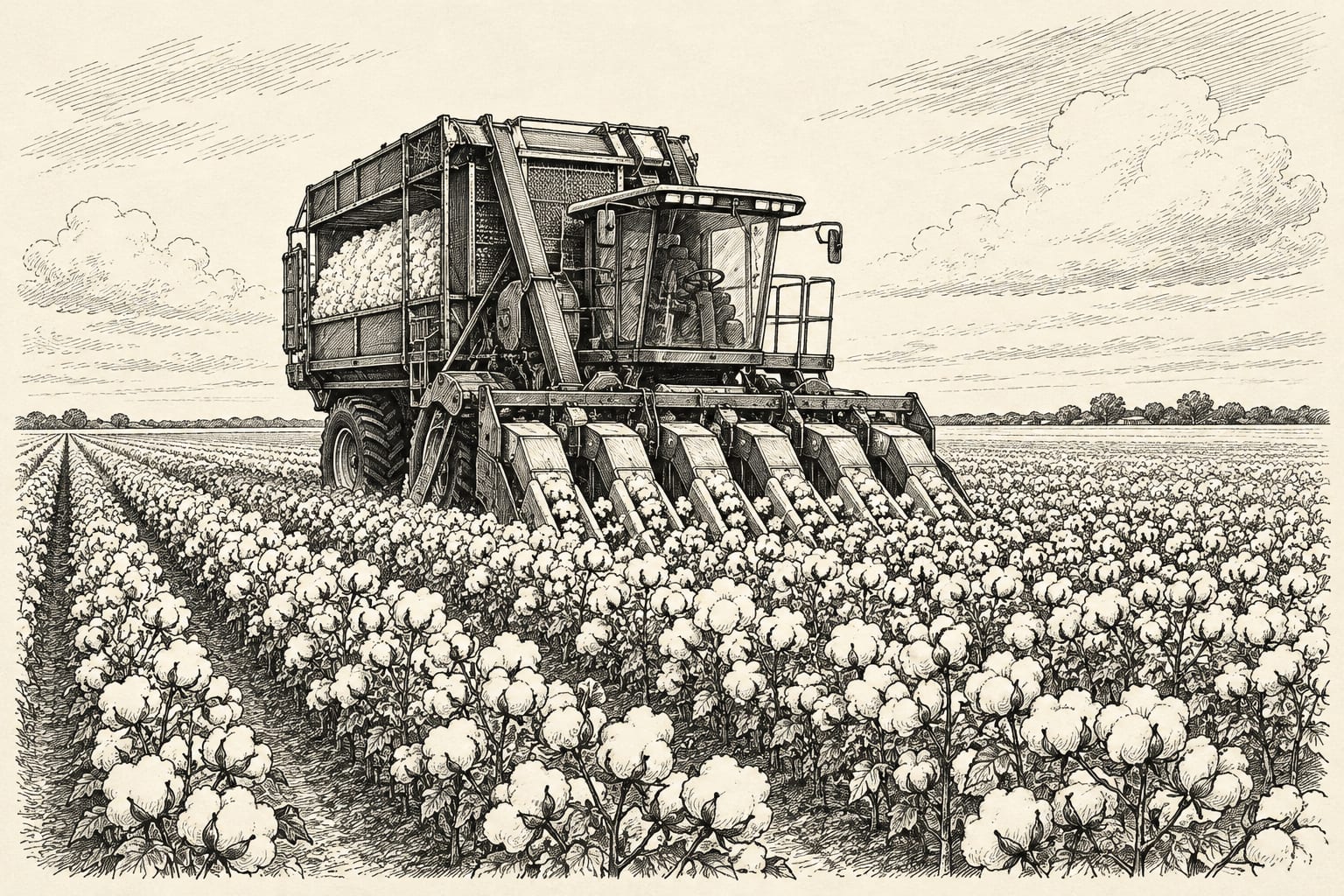
- 75 percent of shoppers say sustainable clothing matters to them
- 83 percent see cotton and other natural fibers as safe for the environment
- Fewer than half trust manmade fibers the same way: rayon (48 percent), polyester (46 percent), Tencel (41 percent)
- 75 percent prefer cotton, cotton blends, or denim over polyester (7 percent), spandex (5 percent), or rayon (4 percent)
- 59 percent worldwide say they’d pay more for natural fiber clothes, rising to 85 percent in India and 66 percent in Mexico
Shoppers also ranked cotton as more comfortable (67 percent), softer (66 percent), higher quality (59 percent), more sustainable (49 percent), and longer-lasting (44 percent) than synthetic options.
What it means for residents
This matters if you’re the kind of person who buys once and wears something for years instead of tossing it after a season. The U.S. Environmental Protection Agency says 85 percent of textiles in America end up in landfills every year, and nearly 70 percent of the world’s clothing fibers are now synthetic, mostly polyester. Every wash or wear of those fabrics sheds microplastics that don’t break down for generations.
Liz Hershfield, who leads Cotton USA and co-directs the U.S. Cotton Trust Protocol, said there’s a real gap between how fashion brands talk about sustainability and what cotton farmers have actually been doing on the ground for years. She also noted growers were early adopters of precision tools like satellite imagery, drones, and AI-driven farm management, all used to boost yields while cutting their environmental impact.
She added a point worth remembering for anyone buying clothes or gear: there are more than 15,000 cotton farms across 17 states, and 98 percent are family-owned. Their future depends partly on what fabrics brands and shoppers choose to buy.
What to do if it happened to you
If you’re shopping for apparel or gear made from natural fibers, this data gives you something concrete to check. Look at tags for cotton, cotton blends, or denim instead of polyester or spandex when durability and lower environmental impact matter to you. If a brand claims to be “sustainable,” ask where the fiber comes from and whether it’s backed by real numbers like the ones above.
Your next step today: check the fiber content tag on something in your closet or on your gift list. If it’s mostly synthetic, you now know what that choice means for landfills, microplastics, and the farms that could have grown it instead.
Source: WWD
Related reading from us: SmallRig’s New $200 Camera Backpack: Smart Buy or Bad Deal for Photographers?