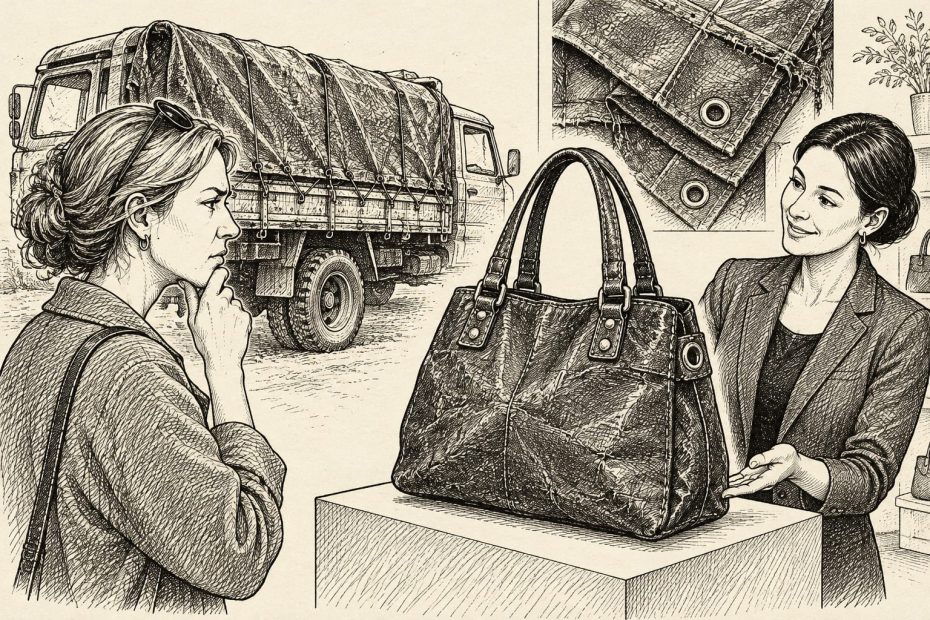
Fast Company is asking a simple question: would you pay $660 for a handbag made from a recycled truck tarp? The report points to Freitag, the Swiss brand famous for turning old truck covers into bags, and looks at how its prices now sit next to names you’d see in a luxury handbag display.
Good Earth Montana cares about what a bag is made of, how long it lasts, and whether the price matches the materials, not just the name on the tag.
How to spot it
Freitag bags are built from used truck tarp, the thick waterproof cover that protects freight on the road. Because every tarp has its own wear, color, and stains, no two Freitag bags look exactly alike. Here’s what tends to define this kind of bag:
- Material: recycled truck tarp, often paired with old seatbelts for straps and bike inner tubes for trim
- Look: scuffed, faded, or stained in spots, since that’s the tarp’s real history, not a defect
- Price range: the report points to one model at $660, which is well above what most tarp or canvas bags cost
- Durability claim: truck tarp is made to survive highway weather, rain, and road grit for years before it’s retired
- Waste story: the bag’s whole pitch is that it saves a tarp from landfill and turns it into something you carry daily
If you shop for a bag like this, look at the actual material description, not just the brand story. A bag made from scrap material can still be well-built, but the price should reflect the work of cutting, sewing, and finishing, not just the recycled label.
What it means for residents
For folks who care about where their gear comes from, this is a real trend worth watching. Recycled and upcycled materials, from truck tarps to old sails to retired fire hoses, are becoming a selling point in bags that once sat firmly in the budget aisle.
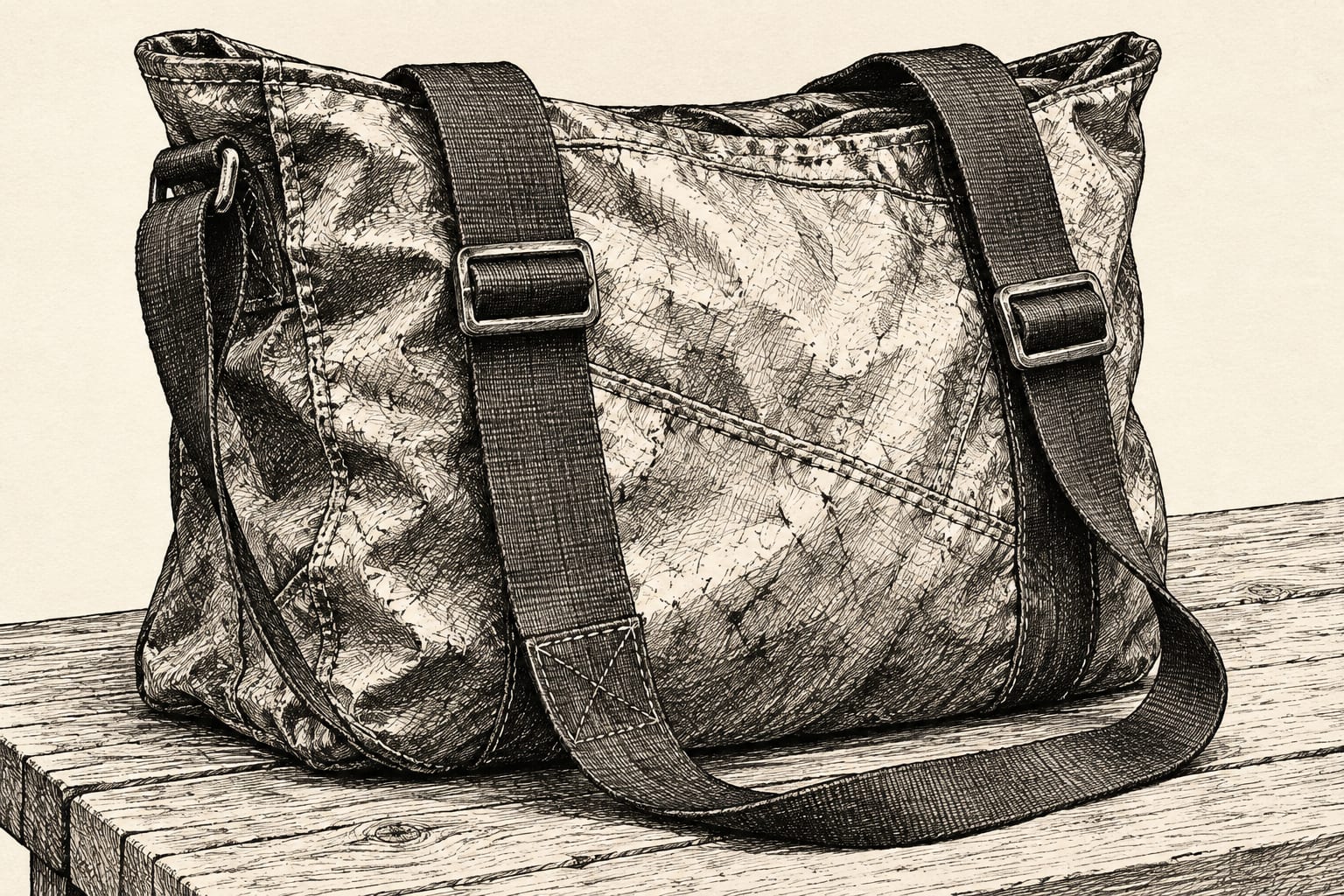
That shift raises the price on some of these bags close to what you’d pay for a full-grain leather tote or a well-made canvas pack. If you’re a commuter, traveler, or someone who just wants one tough bag that lasts years, it’s worth comparing a $660 tarp bag against a leather or heavy canvas bag at a similar price. Both can last, but they wear differently and need different care.
Photographers and DIYers who like one-of-a-kind gear may find the tarp bag’s irregular look appealing. Gift shoppers should know that the uniqueness cuts both ways: no two bags match exactly, so what you see in a photo may not be what arrives.
What to do if it happened to you
If you already bought a bag like this, or you’re thinking about it, a few simple checks help you know what you got:
- Ask what the tarp or recycled material actually is, and how it was cleaned and prepped before sewing.
- Check the stitching and seams in person or in close-up photos. Honest wear on the outer material is fine, but loose stitching is not.
- Compare the weight and size specs to a leather or canvas bag you already own or trust, so you know what you’re trading off.
- Keep the receipt and any care instructions, since tarp material may need different cleaning than leather or canvas.
A bag like this isn’t a bad idea just because it costs more than you’d expect from “trash.” The real question is whether the price buys you honest materials and solid construction, not just a good story.
Next step: before you spend $660 or more on any bag, pull up the material description and compare it side by side with a leather or canvas bag you already trust. That one comparison tells you fast whether you’re paying for durability or just for a clever idea.
Source: Fast Company
If you missed it: Cotton Farmers Have Receipts: New Data Shows U.S. Cotton Beats Synthetics on Sustainability