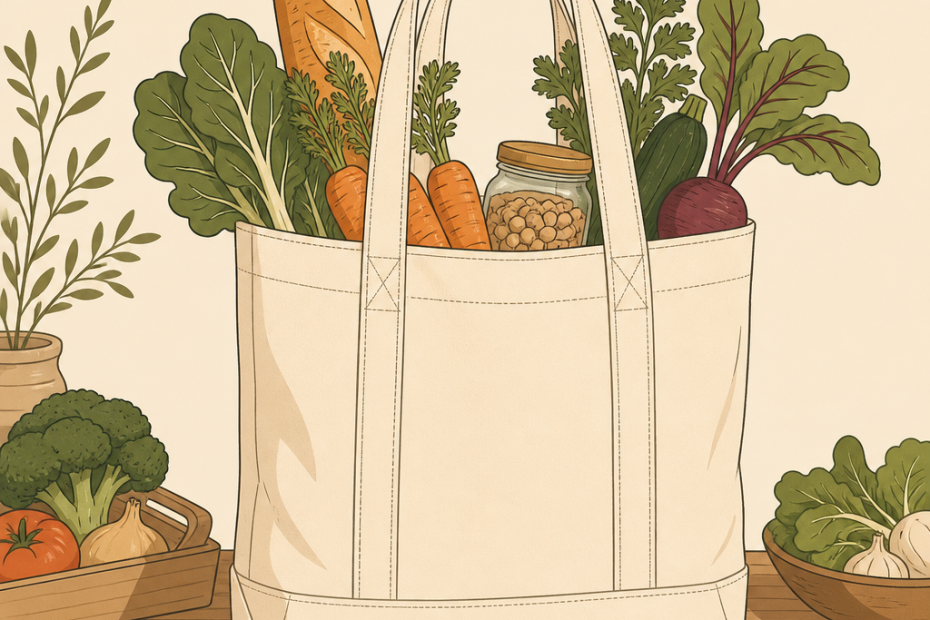
An organic cotton tote for groceries and everyday use needs to do two jobs that pull in opposite directions: carry heavy, awkward loads at the supermarket and still look reasonable at the library, the farmers market, or the office. The bags that fail at this are either too flimsy for groceries or too bulky for everyday errands. The right choice sits in the middle — heavyweight canvas, reinforced handles, and a simple structure that works everywhere. This guide covers what to check, what capacity you actually need, and how to make a cotton tote last through hundreds of trips.
Best Organic Cotton Tote Bag for Groceries and Everyday Use
Sponsored: This article contains product links. We may earn a commission on qualifying purchases at no extra cost to you.
One Bag, Two Jobs: What the Design Must Balance
Grocery loads and everyday loads stress a tote differently. Groceries mean heavy, dense weight concentrated at the bottom — cans, bottles, produce. Everyday carry means lighter weight but more organization: keys, wallet, phone, a book, maybe a laptop. A tote that handles both needs a reinforced base, sturdy handles, and at least one interior pocket. The heavy-duty zippered canvas tote (see the heavy-duty canvas tote) delivers this combination: a structured base that stands on its own, 22-inch-wide capacity, and full-length zipper security.
Summary: A grocery-and-everyday tote needs a reinforced base for heavy loads, sturdy handles, and at least one interior pocket for daily items. Capacity around 20 liters balances grocery volume with everyday portability.
What to Check Before Buying
Canvas weight. For a dual-purpose tote, 14 oz (470 gsm) is the minimum that reliably handles grocery loads without stretching or tearing. At 18 to 22 oz (610 to 750 gsm), the bag is heavier but nearly indestructible and holds its shape when empty. The heavy-duty 22-inch canvas tote (browse the 22-inch heavy-duty tote) uses the heavier range for maximum grocery capacity.
Handle length and reinforcement. Handles should be long enough to sit comfortably on the shoulder (about 11 to 12 inches / 28 to 30 cm) and reinforced at the attachment points. Bar-tacked or double-stitched handles are the difference between a tote that lasts years and one that rips on the walk home from the store.
Base construction. A flat, structured base distributes weight and keeps the bag standing upright. Without it, a grocery load slumps into a pile that is hard to carry and harder to pack.
Closure. A zipper is optional for grocery trips but valuable for everyday carry — it keeps keys, wallet, and phone from spilling when the bag tips. If the tote is used mainly for groceries, a magnetic snap or open top is fine; for daily carry, choose the zipper.
How much can different canvas weights carry:
| Canvas weight | Comfortable grocery load | Everyday capacity | Best use |
|---|---|---|---|
| 10–12 oz | 8–10 lb (3.6–4.5 kg) | Light errands | Market, small shops |
| 14–16 oz | 15–20 lb (6.8–9 kg) | Full daily carry | Groceries + everyday |
| 18–22 oz | 25–30 lb (11–14 kg) | Heavy loads | Weekly grocery runs |
Why Organic Cotton for a Bag You Use Every Week
An everyday bag is exactly where material choices matter most, because the bag is used hundreds of times. Organic cotton is grown without synthetic pesticides or fertilizers and, per the Textile Exchange’s organic cotton market reporting, uses roughly 91% less water than conventional cotton in comparable conditions [1]. Look for GOTS certification to verify the claim — it audits the entire supply chain, including processing and social criteria.
Organic cotton canvas also handles regular washing better than synthetic blends, and at end of life it is biodegradable and compostable. For a bag that will be washed weekly after grocery trips, that matters.
How Many Totes Do You Actually Need?
Most households need three totes to break the single-bag bottleneck: one kept in the car for unplanned grocery stops, one by the front door for planned shopping, and one folded in a daily bag for errands and farmers market visits. This distribution is the practical reason reusable tote programs succeed — a tote only helps if it is physically present when you shop.
Related Topics You May Find Helpful
How Many Times Must You Use a Tote to Offset Its Footprint?
Lifecycle assessments generally estimate that a cotton tote should be used roughly 50 to 100 times to offset its production footprint versus single-use plastic bags. A grocery tote used weekly reaches that threshold within a year.
Can You Machine Wash an Organic Cotton Grocery Tote?
Yes. Machine wash cold on a gentle cycle and hang to dry. Cold water prevents shrinkage; skip bleach, which weakens cotton fibers. Washing regularly also prevents the bacterial buildup that can occur in reusable bags used for fresh produce.
What Size Grocery Tote Is Best?
For a standard weekly shop, totes around 15 x 15 x 6 inches (38 x 38 x 15 cm) hold 4 to 6 plastic bags’ worth of groceries. For larger families, 22-inch-wide heavy-duty totes carry substantially more.
Frequently Asked Questions About Grocery Totes
Are canvas totes good for groceries?
Yes, when the canvas is 14 oz or heavier and the handles are reinforced. Lightweight totes stretch and tear under grocery weight; heavyweight canvas handles a full weekly load.
How do I keep a cotton tote from smelling?
Wash it regularly (cold, gentle cycle), let it dry completely before storing, and avoid leaving damp produce or meat packaging inside. A weekly wash keeps cotton totes fresh.
Is organic cotton better than recycled polyester for groceries?
For groceries, organic cotton is the better choice — it is heavier and more durable for dense loads, washable, and biodegradable. Recycled polyester is lighter and dries faster but sheds microplastics.
Key Takeaways
- Choose 14 oz (470 gsm) or heavier organic cotton canvas for a tote that handles both groceries and daily carry.
- Reinforced, bar-tacked handles are the most important durability feature.
- A structured base keeps grocery loads stable and the bag upright.
- Keep three totes — car, front door, and daily bag — so one is always available.
- Wash cold and hang dry to prevent shrinkage and bacterial buildup.