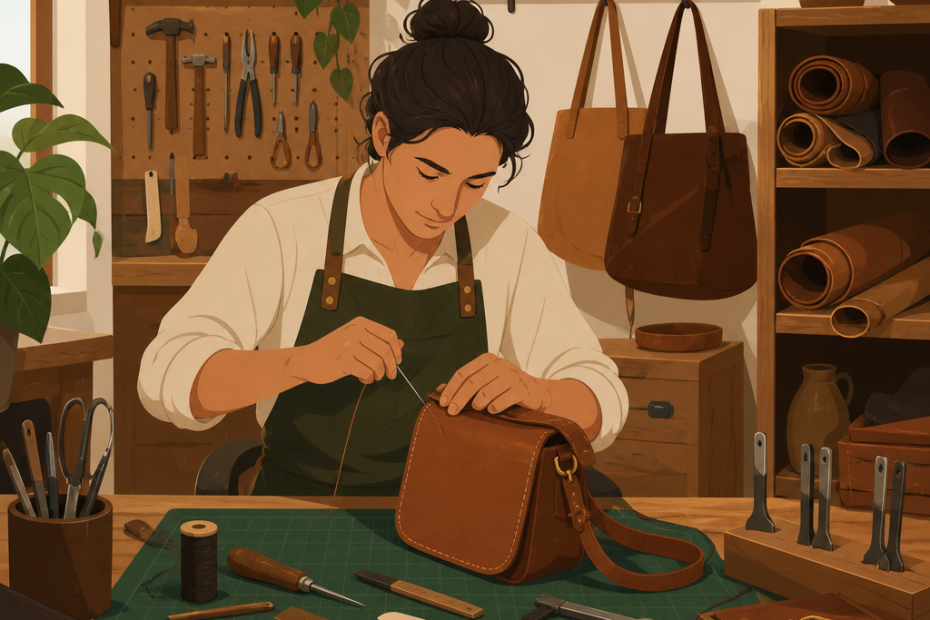
There is a quiet movement in fashion toward buying local: supporting workshops in your region, knowing the people who made your things, and shortening the supply chain from maker to wearer. For accessories, “locally made” is more than a feel-good label — it means verifiable production, accountable labor, and a smaller transport footprint. This guide explains what “local” and “made in America” really mean for sustainable bags, how to find genuinely local makers, and when a global brand with transparent sourcing is the better choice.
Locally Made Sustainable Bags: How to Find and Support Regional Makers
Sponsored: This article features products from brand partner campaigns on Amazon. We may earn a commission from qualifying purchases made through the product links in this post, at no extra cost to you.
Why Local Matters for Sustainability
Buying locally made accessories shortens the supply chain in ways that matter: fewer shipping miles, smaller batches (less overproduction), and direct accountability — a maker you can visit answers for their labor practices in a way a distant factory never will. Local also means the money stays in the regional economy, and the product carries a story you can verify by walking into the workshop. For anyone tired of anonymous global manufacturing, local is the most tangible form of ethical fashion.
The honest caveat: local does not automatically mean sustainable. A local maker using imported virgin leather and plastic hardware still has a footprint; a global B Corp with audited factories can be genuinely ethical. The goal is not local-versus-global — it is verifiable production, wherever it happens.
What “Made in the USA” Actually Covers
“Made in the USA” is a regulated claim (the FTC requires substantial transformation here), but it covers a range of realities: a bag fully cut and sewn in an American workshop, or an American-assembled bag using imported components. Both are legitimate, but they are different stories. Ask which parts are domestic — the leather, the hardware, the assembly — and you will get a clearer picture than the label alone.
Regional specifics matter too: a bag from a workshop in Montana or the Pacific Northwest has a different character (and supply chain) than one from a New York garment district studio. Neither is better; both are checkable.
How to Find Genuinely Local Makers
- Search regionally — “leather workshop [your state]” or “[region] canvas bag maker” surfaces small workshops that do not rank nationally.
- Visit makers markets and craft fairs — the best local makers often sell at farmers markets, craft fairs, and regional art shows; you can see the product and meet the maker.
- Check Instagram and Etsy for shop locations — a maker who shows their workshop, tools, and process is verifiable; one who only shows product photos is harder to assess.
- Ask about lead times — small workshops often make to order; a real lead time is a good sign of actual production (and you can request custom details).
- Look for repair services — local makers who repair their own work are signaling that they stand behind it for years.
When Global Is the Better Choice
Local is not always possible or best. A rural buyer may have no regional bag maker; a specialized material (certified plant-based leather, technical recycled fabric) may only exist from global suppliers; and a global brand with audited factories, published wages, and third-party certification can outperform an unverifiable local seller. The decision rule is the same as ever: verify the claim. Local wins when the production is genuinely local and accountable; global wins when its transparency is stronger than a local maker’s marketing.
Verifying Any Maker in Five Questions
| Question | What a real answer sounds like |
|---|---|
| Where is the workshop? | A city, street, or region — not “overseas” or vague |
| Who makes the bags? | Named artisans, a team size, or a workshop photo |
| What materials and from where? | Specific leather, tannery, or mill names |
| Can I visit or see production? | Open workshop days, process photos, or video |
| What happens if it breaks? | A repair policy, not just a return window |
Apply the same questions to any brand, local or global — the answers separate substance from slogans.
Examples of Verifiable, Transparent Sourcing
To see the difference between claims and evidence, compare how transparent brands present themselves. A brand that publishes detailed material and sizing information, names its construction, and sells consistent quality gives you verifiable detail instead of adjectives — the same standard you should hold any maker to.
See the linseyCove phone messenger bag on Amazon
See the SMONT tactical messenger bag on Amazon
Frequently Asked Questions
Are locally made bags more expensive? Often yes, for good reason: small-batch production cannot match factory economies of scale, and real wages cost more than underpaid factory labor. The price buys verifiable production and durability — and a local bag kept for a decade is cheaper than three imported fast-fashion bags.
Is “handmade” the same as “local”? No. “Handmade” describes the process; “local” describes the location. A bag can be handmade in a distant country or machine-made locally. Both claims matter, but they answer different questions.
Does buying local really reduce carbon? Shipping is a small share of most products’ footprint (manufacturing dominates), so local is not a carbon silver bullet. The bigger wins are durability, small-batch production, and fewer returns. Local helps; it is not the whole story.
Can I support local makers without buying? Yes: share their work, attend their events, and leave honest reviews. Small makers depend on visibility as much as sales.
What if I cannot find a local maker I trust? Buy from the most transparent brand you can verify — global or local — and hold them to published standards. Verified beats local every time when the local claim is uncheckable.
Key Takeaways
- Locally made bags offer verifiable workshops, accountable makers, and a shorter supply chain.
- ‘Local’ is a starting point, not a guarantee — apply verification questions to any maker.
- Small batches mean less overproduction and waste.
- A global brand with transparent sourcing can beat a local maker using imported virgin materials.
- The most tangible ethical fashion is one you can verify in person.
Disclosure: This article contains sponsored content and product links. As an Amazon Associate, we may earn from qualifying purchases. Prices and availability were checked at the time of writing and may change.