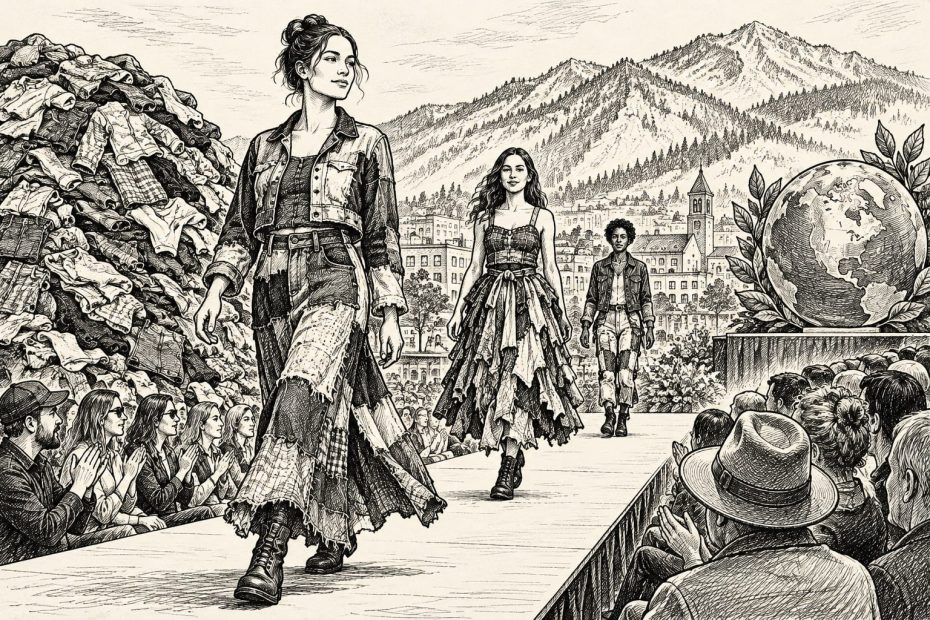
A coffee shop in Missoula, Montana, hosted a packed fashion show this October to fight climate change with clothes made from scraps and old fabric.
More than 100 people showed up at Funk It Coffee and Thrift on a Thursday night in October for the third annual Climate Solutions Week Fashion Show. Models walked a runway made between couches and chairs, under a disco ball, while a DJ played music. Five local designers showed off clothes they made by hand, often from fabric that would have been thrown away.
Chloe Russell, who co-owns Funk It with her cousin Markie, hosted the show. She joked about the climate crisis while describing each outfit. One look, she said, was a white top made from a repurposed tablecloth, paired with shorts sewn from denim scraps.
This event is part of Missoula’s Climate Solutions Week, started by a nonprofit group called Climate Smart Missoula. Shanti Devins, who works with the group, said this past summer was the hottest ever recorded in the lower 48 states. She said that kind of news can make people feel hopeless, and that feeling is exactly why the group started this event.
“We’re this collective hive,” Devins told the crowd before the show. “We’re humming along, and we are part of the solution.”
What this means for you
You may have heard that clothes shopping hurts the planet, but the numbers can be hard to picture. Fashion makes up 10% of the world’s greenhouse gas emissions, which are gases that trap heat and warm the Earth. That makes fashion the second biggest polluting industry, right behind oil and gas.
A lot of this comes from what people call “fast fashion.” These are cheap, trendy clothes often made in factories overseas where workers face unsafe conditions, low pay, and sometimes forced labor. Many of these clothes are made from plastic-based material like polyester, which sheds tiny plastic bits called microplastics every time you wash it. Devins said these microplastics are bad for the environment and for our bodies.
Devins also pointed to a 2024 study by researchers in China. They looked at jeans as an example and found that, on average, people only wear a pair of jeans seven times before tossing them. When clothes pile up in landfills, they break down and release methane, a gas that warms the planet even more than carbon dioxide.
This site exists to explain stories like this one in plain language, for people who are busy but want to understand what is really going on. You should never need a dictionary just to follow the news, and climate change is no exception.
How Missoula designers are fighting back
The Missoula fashion show pushes back against fast fashion by showing what “slow fashion” looks like. Slow fashion means clothes made carefully, often by hand, using materials that already exist instead of buying new ones.
Here is how some of the designers at the show described their work:
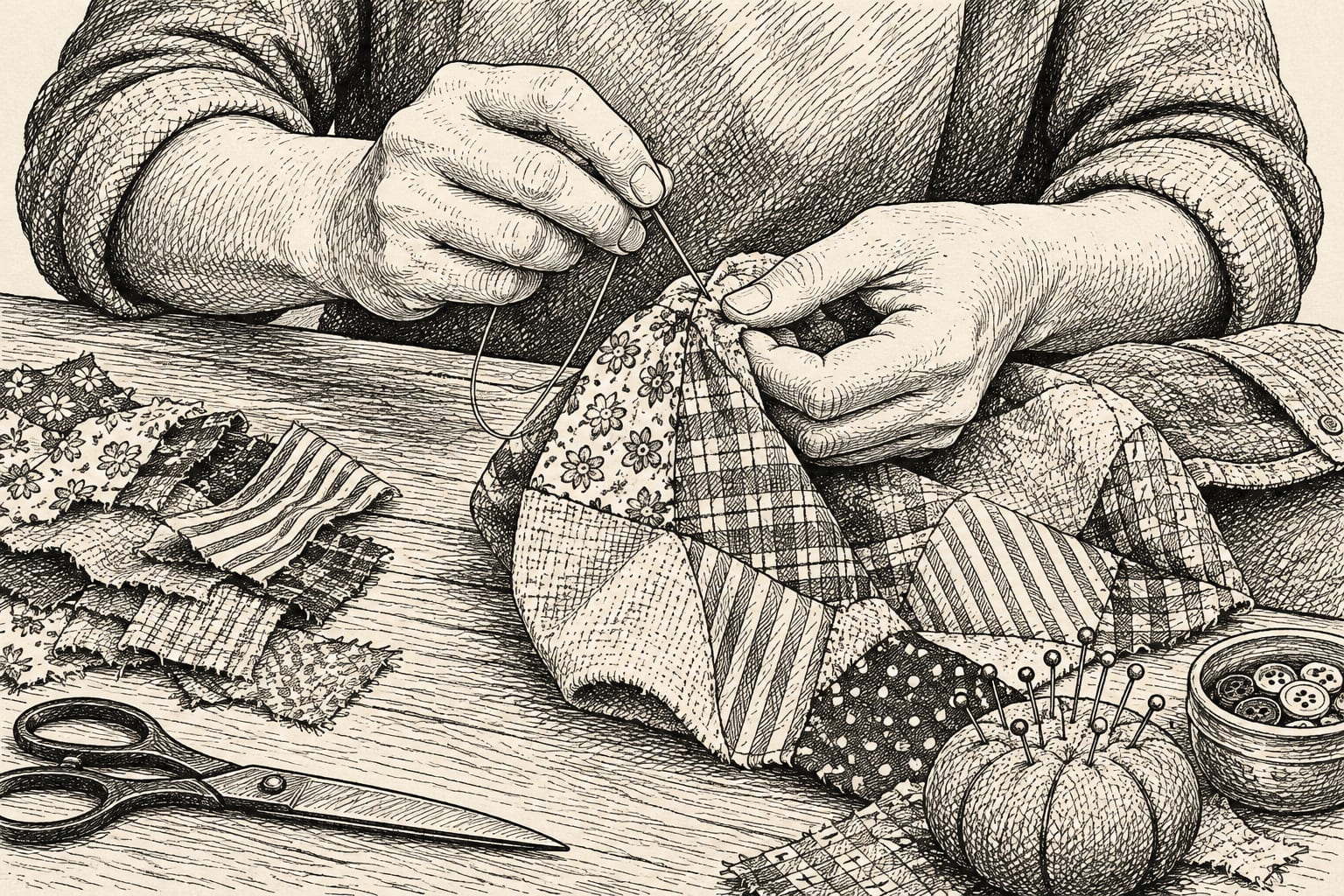
- Amy Pearson, who runs CC Designs, uses old family textiles like her grandmother’s embroidered tablecloths. She also upcycles napkins and bed linens into new pieces.
- Leah Thompson, who runs Moonlight Citizen, makes swimwear and athletic clothing. She also creates sewing patterns so others can make their own sustainable clothes.
- A designer called Lessons Learned turned leftover denim scraps into a pair of shorts featured in the show.
Pearson said she tries to be as thoughtful as possible about what she uses. She would rather give old fabric a new purpose than see it sit unused or end up in a landfill.
Thompson said the Missoula community feels creative and welcoming, and being part of the fashion show makes her feel connected to something bigger than herself.
Chloe Russell said the goal of the show is not to shame anyone for buying fast fashion. Instead, she said the point is to teach people what slow fashion looks like and show that it is possible.
Markie Russell, the other co-owner of Funk It, said the team did not know what to expect when they started the fashion show three years ago. Since then, they have heard from attendees and designers that it has become a favorite part of Climate Solutions Week.
Your next step
If you want to fight climate change in a simple way, start by looking at the clothes you already own before buying something new.
Source: Montana Free Press
Before this, we covered: 10 More Ethical Fashion Brands From Switzerland, According to Good On You