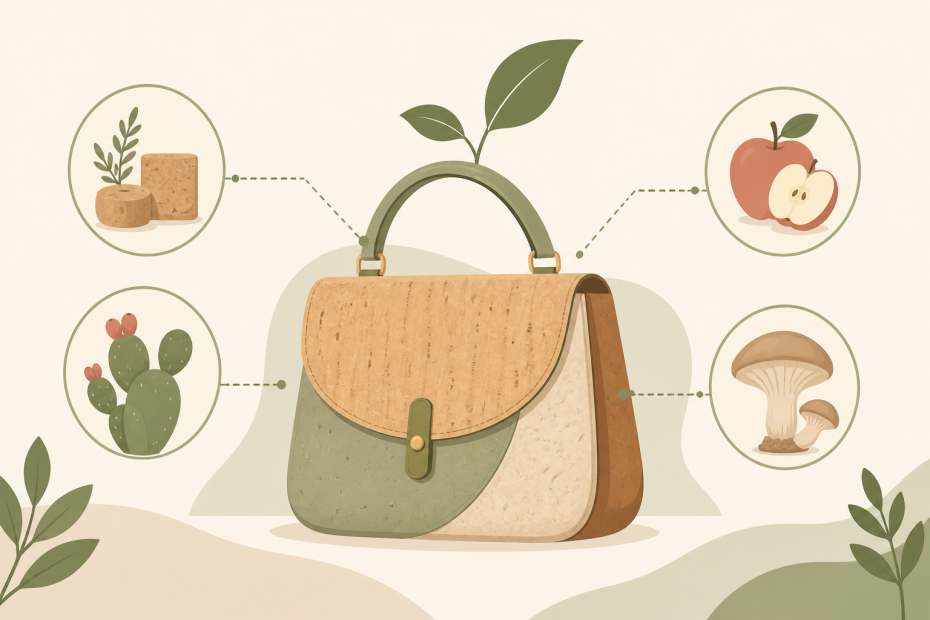
Plant-based leather is one of the fastest-growing categories in sustainable fashion, but the term covers a wide range of materials with very different environmental profiles. From cork and apple leather to cactus and mushroom mycelium, each material has its own strengths, limitations, and ideal use cases. This guide explains what plant-based leather actually is, how it compares to animal leather, and what to look for when choosing a bag made from these materials.
Plant-Based Leather Handbags: What Vegan Leather Really Means
Sponsored: This article features products from brand partner campaigns on Amazon. We may earn a commission from qualifying purchases made through the product links in this post, at no extra cost to you.
Plant-based leather includes materials from cork, apple waste, cactus, pineapple leaves, mushroom mycelium, and other natural sources. These are biodegradable, use renewable resources, and often repurpose agricultural waste. Durability varies widely, and long-term performance is still being established.
The Short Answer
Most durable: cork leather (water-resistant, lightweight). Apple leather (soft, supple). Cactus leather (versatile, economical). Plant-based leathers generally last 3–7 years versus 10–20+ for full-grain leather. Choose brands with clear material sourcing and warranties.
Types of Plant-Based Leather
Cork leather: from bark, lightweight, water-resistant, antimicrobial. Apple leather: from apple waste, soft, supple. Cactus leather (Desserto): from nopal cactus, versatile, breathable. Piñatex: from pineapple leaf fibers, strong, textured. Mylo: from mushroom mycelium, soft, biodegradable, currently expensive.
Plant-Based Leather Types Compared
| Material | Source | Strength | Typical lifespan |
|---|---|---|---|
| Cork leather | Bark | Water-resistant, lightweight | 3-7 years |
| Apple leather | Apple waste | Soft, supple | 3-7 years |
| Cactus leather | Nopal cactus | Versatile, breathable | 3-7 years |
| Piñatex | Pineapple leaf fibers | Strong, textured | 3-7 years |
| Mylo (mycelium) | Mushroom roots | Soft, biodegradable | Still emerging |
How It Compares to Animal Leather
Full-grain leather: 10–20+ years, repairable. Plant-based: 3–7 years, lighter, more water-resistant, less conditioning. Trade-off: shorter lifespan, less repair infrastructure. Choose brands with clear warranties.
Plant-based leather: the vegan-leather meaning
Plant-based leather discussions have a meaning at the center: the vegan leather handbags are understood before the buy. The conversations are consistent — the plant-based leather handbags — the what-vegan-leather-really-means, the materials, and the fits — guide the ethical pick, and the meaning angle covers the process.
The practical advice: understand what the vegan leather really means — the plant-based and the synthetic materials vs. the animal hides — and the trade-offs: the durability, the feel, and the environmental cost, with the care. The bag that works is the one matched to the values and the use. The informed plant-based pick is the one the meaning delivered.
Featured Products
A durable canvas tote as an eco-conscious alternative: See the canvas tote bag on Amazon.
A structured crossbody bag in a neutral tone: See the compact crossbody bag on Amazon.
FAQ
Is plant-based leather durable enough for daily use? Yes — cork, apple, and cactus leather are durable for daily handbags. Lifespan 3–7 years.
Is plant-based leather waterproof? Most are water-resistant. Cork is the most water-resistant. Avoid prolonged rain exposure.
How do I care for plant-based leather? Clean with damp cloth and mild soap. Avoid harsh chemicals. Store in cool, dry place.
The Plant-Based Leather Landscape: Beyond the Name
“Plant-based leather” covers a wide spectrum, and the name hides the important differences. Some plant-based materials are genuinely new — Piñatex (pineapple leaf fibers), apple leather (apple waste), mushroom leather (mycelium), and cactus leather are the headline innovations, each with real sustainability potential but also real caveats about durability and cost. Other “plant-based” materials are primarily plastic with a plant-derived fraction — a polyurethane base with a percentage of bio-content that behaves exactly like plastic at end of life. The honest buyer reads past the name to the composition: what percentage is plant-derived, what is the binder (often still plastic), and what happens at end of life? The plant-based category is genuinely promising but still maturing — the materials are improving rapidly, and the buyer’s role is to ask the composition question rather than assume the name means biodegradable.
Durability and Care: The Plant-Based Reality
Plant-based leathers face a durability reality that buyers should know before purchasing. The newer materials (pineapple, apple, mushroom, cactus) are often backed with a textile or coated with a finish for structure — which means they require care similar to coated materials: gentle cleaning, no harsh solvents, and protection from prolonged moisture. Their durability is improving but generally does not yet match full-grain leather; scuffs and wear are harder to repair on many plant-based materials than on leather, which can be conditioned and re-dyed. The care routine: spot-clean with a damp cloth, avoid heat and direct sun, and store properly to prevent the backing from separating. The honest expectation: plant-based leather is a maturing category that suits bags used with reasonable care, while leather remains the durability leader. The choice is a values and use-case decision — and both can be sustainable when the bag is used for years.
Price and Value: What You Pay for in Plant-Based Leather
Plant-based leather pricing tells a story worth reading. The newer materials (mushroom, apple, pineapple, cactus) are genuinely expensive to produce at scale, so a premium price can reflect real innovation — or it can reflect marketing on a plastic-based material with a plant-derived name. The value comparison: a $150 plant-based bag that lasts five years costs $30 per year; a $300 full-grain leather bag that lasts twenty costs $15 per year — the “cheaper” material can be the more expensive choice over time. The honest buyer’s math: divide the price by the realistic years of use, and compare cost per year across materials rather than sticker price. The plant-based category is worth supporting for its innovation potential, but the value decision should follow the same durability math as any material — the bag that lasts longest is the best value, whatever it is made of.
What we covered
- Plant-based leather includes cork, apple, cactus, pineapple, and mushroom materials with very different profiles.
- Cork is the most durable and water-resistant; apple is soft and supple; cactus is versatile and economical.
- Plant-based leathers typically last 3-7 years versus 10-20+ for full-grain leather.
- Premium price can mean real innovation — or marketing on a plastic-based material.
- Compare cost per year of use, not sticker price, when choosing between materials.
Disclosure: This article contains sponsored content and product links. If you make a purchase through the links in this post, we may earn a commission at no extra cost to you. Product evaluations are based on published specifications, industry guidance, and verified owner feedback.